10 Medical Equipment Installation Tips for Global Buyers
Buying advanced medical devices across borders involves more than comparing prices and technical specifications. Medical equipment installation affects patient safety, diagnostic accuracy, workflow efficiency, and long-term operating costs. A successful project begins before the equipment leaves the supplier’s facility.
Global buyers should examine site conditions, utility requirements, room dimensions, shielding needs, network access, and local compliance expectations. A small mistake in voltage, ventilation, or floor loading can delay commissioning for weeks. It helps to involve qualified biomedical engineers, facility managers, infection-control specialists, and the manufacturer’s authorized service team early.
Plan every detail.
This guide presents ten practical medical equipment installation tips for international purchasing teams. It considers shipping damage, customs documentation, installation supervision, calibration, operator training, acceptance testing, cybersecurity, and preventive maintenance. Photographs of the installation room, verified utility readings, and signed inspection records can prevent unclear responsibility later.
Experienced teams still overlook simple details. A doorway may be too narrow. A network port may be unavailable. Training may end before staff gain confidence. These gaps deserve honest review, not blame. Requirements also differ between countries, facilities, and equipment categories, so buyers should confirm current guidance with competent local authorities and qualified professionals.
The goal is not merely to make equipment operational. It is to create a safe, documented, and supportable clinical system that performs reliably after installation day. Careful preparation saves time, protects budgets, and gives healthcare teams greater confidence in every patient-facing procedure.
Assess Site Readiness Against Manufacturer Limits for Temperature, Humidity, and Power
10 Medical Equipment Installation Tips for Global Buyers
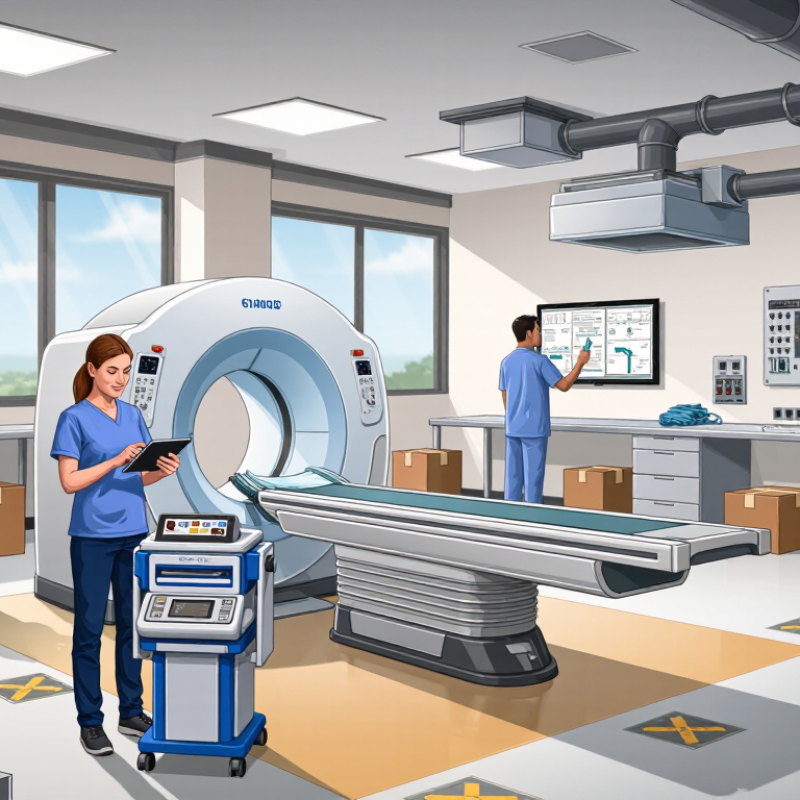
Assess site readiness against the manufacturer’s limits before shipping equipment. A clean room is not automatically a suitable room. Confirm temperature, humidity, voltage, frequency, phase, grounding, and available circuit capacity. Compare readings with the latest installation manual, not an old quotation.
Tip: Place calibrated data loggers at the planned equipment position for at least 48 hours. Record conditions during busy and quiet periods. Many facilities stay cool overnight but become warm when staff and systems operate together. Check seasonal changes too. A dry winter and humid summer may produce very different risks.
Power quality needs equal attention. Measure voltage stability, frequency variation, grounding resistance, and transient events with suitable test equipment. Ask a qualified electrician to verify the supply under load. Add approved conditioning or backup power only when the manufacturer permits it. Never assume a wall outlet is adequate. Small assumptions can become expensive delays.
Leave clearance around the equipment for airflow, servicing, and safe movement. Inspect nearby sinks, windows, vents, and doors for moisture or temperature swings. Keep inspection records, photographs, and measured values in the project file. This sounds simple, yet documentation is often incomplete. Recheck the room after construction changes, because dust, new partitions, or altered ventilation can change site conditions before delivery.
Confirm Global Compliance with ISO 13485, IEC 60601-1, and Local Registration Rules
Before installation, confirm that the equipment supports ISO 13485-controlled manufacturing processes and traceable quality records. ISO 13485 is not a product safety certificate. It demonstrates a structured quality management system, including design control, supplier oversight, and corrective action procedures. Request current certificates, declarations, test reports, and serial-number records from the supplier. Check that every document matches the shipped configuration.
IEC 60601-1 addresses essential electrical safety and basic performance for medical electrical equipment. Review leakage current, grounding, insulation, power requirements, and environmental limits before connecting the unit. A qualified technician should inspect the room’s voltage, protective earth, ventilation, and emergency access. Measure it. Do not rely on assumptions. Installation instructions should also cover software versions, accessories, alarms, and maintenance intervals.
Local registration rules require separate attention. Confirm whether the device needs authority registration, import approval, language-specific labeling, or a local authorized representative. Requirements may differ between countries and even device classifications. Keep approval records with the installation file, alongside training logs and acceptance-test results. A useful but often missed step is documenting room photographs before and after installation. They clarify cable routing and future service conditions. Some teams treat a signed delivery note as acceptance, which can be inadequate. A witnessed performance check is safer. Mistakes still happen, especially when translated documents are incomplete, so ask local regulatory professionals to review uncertain points before clinical use.
Plan Logistics Using Equipment Weight, Doorway Dimensions, and Shock Limits
Medical equipment can arrive safely and still fail at the doorway. Weight, dimensions, and shock limits should shape the delivery plan before freight is booked. In field installations, I measure the packed unit, not only the equipment itself. Crates add width, height, and surprising weight. That difference matters.
Record gross weight, crate dimensions, center of gravity, and the permitted shock level. Confirm floor loading and elevator capacity with the facility team. Use the actual clear doorway width, with doors fully open. Then check corridors, ramps, turning points, and ceiling height. Doorway dimensions are not enough. A trolley may need extra clearance for safe steering.
I once treated a 90-centimeter doorway as usable because the crate was narrower. The pallet blocked the turning angle, causing an avoidable delay. I should have drawn the route to scale. That mistake changed our process. We now photograph access points, verify liftgate requirements, and ask for a site contact before dispatch. Keep shock indicators visible and inspect them upon arrival. If limits are exceeded, record the condition before unpacking and contact the responsible logistics team. Small gaps in planning can become expensive installation problems.
Install and Test with IEC 62353 Safety Checks and ISO/IEC 17025 Traceability
10 Medical Equipment Installation Tips for Global Buyers
Safe installation begins before the equipment reaches the clinical room. Confirm site voltage, grounding, humidity, ventilation, and access routes. Inspect packaging for impact or moisture. Match the delivered configuration with the purchase order. Record serial numbers, accessories, software versions, and visible damage. Keep the installation manual available. Small omissions matter. The World Health Organization reports that about one in ten patients experiences harm in healthcare, with more than half considered preventable. Installation discipline is therefore a clinical responsibility, not only a logistics task.
After connection, perform IEC 62353 checks appropriate to the equipment and local procedure. Test protective earth resistance, insulation, and leakage or touch current. Use calibrated instruments, stable power, and documented test conditions. Repeat testing after repairs or major changes. Ask the testing laboratory for an ISO/IEC 17025 accreditation scope, not merely a certificate logo. Verify calibration dates, uncertainty, environmental conditions, and traceability to recognized national or international measurement standards. Store raw readings with the final report. A pass result without test limits is weak evidence. One practical lesson is often missed: acceptance testing should include realistic accessories and normal operating modes. Otherwise, a device may pass on the bench yet fail beside a patient. A second review by a qualified biomedical engineer can expose errors, though busy teams sometimes skip it. That choice deserves reflection.
10 Medical Equipment Installation Tips for Global Buyers
Install and Test with IEC 62353 Safety Checks and ISO/IEC 17025 Traceability
The chart compares the publication years of widely referenced editions for medical equipment installation, electrical safety testing, risk management, and calibration competence. Use IEC 62353 for recurrent tests and tests after repair, and require calibration results to be traceable through an ISO/IEC 17025-compliant laboratory and recognized measurement standards.
Reference editions shown: IEC 62353:2014, ISO/IEC 17025:2017, ISO 14971:2019, IEC 60601-1:2005 with Amendments 1:2012 and 2:2020. Confirm the applicable national adoption and latest edition before installation.
Train Operators and Schedule Preventive Maintenance by Manufacturer Intervals
Installing medical equipment is only the beginning. Global buyers should train operators before clinical use, not after problems appear. Training should cover startup, shutdown, alarms, cleaning, basic troubleshooting, and emergency procedures. Use real controls during practice. A printed manual alone is rarely enough.
Tip: Assign training by role. Operators need daily-use skills, while technicians need deeper maintenance knowledge. Ask each trainee to demonstrate a safe shutdown and respond to a simulated alarm. Record attendance, test results, and remaining questions. Small language differences can cause serious mistakes, so provide translated instructions when needed. Keep the wording simple.
Preventive maintenance must follow the manufacturer’s service intervals and the equipment’s actual workload. Record operating hours, inspections, calibration checks, replaced parts, and unusual noises. A busy imaging unit may need closer observation than a lightly used unit. Maintenance logs should identify the date, technician, findings, and next action. Do not rely only on warning alerts. They may appear after performance has already declined.
A practical schedule includes daily cleaning, weekly visual checks, and qualified technical inspections at the specified interval. Local safety rules may add requirements. Confirm them before installation. In practice, teams sometimes rush training and postpone documentation. That decision saves minutes, but creates uncertainty later. Review the first month of operation with users and technicians. Their feedback may reveal a confusing control, an overlooked alarm, or an unrealistic maintenance task.
10 Medical Equipment Installation Tips for Global Buyers - Train Operators and Schedule Preventive Maintenance by Manufacturer Intervals
| No. | Installation Focus | Recommended Action | Operator Training Requirement | Preventive Maintenance Interval | Required Records |
|---|---|---|---|---|---|
| 1 | Verify site readiness | Confirm room dimensions, access routes, floor loading, ventilation, temperature, humidity, lighting, and safety clearances before delivery. | Explain environmental limits, restricted areas, emergency exits, and conditions that require stopping operation. | Review environmental conditions daily during initial commissioning; reassess after renovations or relocation. | Site survey, room approval, installation checklist |
| 2 | Check electrical supply | Match voltage, frequency, grounding, circuit capacity, plug configuration, and backup-power requirements with the equipment specifications. | Train users to identify power alarms, avoid unauthorized adapters, and follow safe shutdown procedures. | Inspect cables, plugs, outlets, and grounding at least annually or according to local regulations. | Electrical test report, grounding verification, commissioning record |
| 3 | Confirm utilities and connections | For equipment using gas, water, drainage, vacuum, compressed air, or data connections, verify pressure, flow, purity, connectors, and leak-free installation. | Teach operators how to check connection status, recognize leaks, and isolate utilities during an emergency. | Inspect before each use where leakage could create immediate risk; perform formal testing at manufacturer-defined intervals. | Utility test results, leak checks, connection diagram |
| 4 | Complete calibration and acceptance testing | Run functional, performance, safety, and alarm tests using approved procedures before clinical use. | Train users to perform start-up checks and understand acceptable readings, alarm limits, and escalation steps. | Calibrate and verify performance according to the service manual, risk classification, and applicable regulations. | Acceptance test, calibration certificate, alarm test results |
| 5 | Protect software and data | Set user permissions, synchronize time, configure network access, protect patient data, and establish approved backup procedures. | Train staff on secure login, password handling, privacy requirements, removable media, and reporting suspected cyber incidents. | Review accounts, logs, backups, and software status at least quarterly or under the facility cybersecurity policy. | Access-control list, backup log, software configuration record |
| 6 | Provide structured operator training | Use documented training that covers intended use, contraindications, setup, normal operation, cleaning, alarms, and emergency procedures. | Require supervised practice and competency assessment before independent use; provide local-language instructions when needed. | Refresher training at least annually and whenever the device, software, procedure, or risk profile changes. | Attendance sheet, competency assessment, training authorization |
| 7 | Establish cleaning and infection-control procedures | Identify cleanable surfaces, detachable parts, approved disinfectants, contact times, and components that must not be immersed or contaminated. | Demonstrate cleaning between patients, safe handling of reusable accessories, and correct personal protective equipment. | Clean after each use when required; inspect seals, filters, and reusable parts at manufacturer-defined intervals. | Cleaning log, disinfection procedure, accessory inspection record |
| 8 | Schedule preventive maintenance | Create a maintenance calendar based on the manufacturer’s service intervals, usage hours, patient risk, local law, and facility experience. | Teach users to record operating hours, report defects promptly, and never bypass maintenance locks or warnings. | Follow the manufacturer’s specified interval; common checks may be monthly, quarterly, semiannual, or annual depending on equipment type. | Asset register, maintenance schedule, service work order |
| 9 | Prepare spare parts and service support | Identify critical consumables, batteries, filters, fuses, sensors, and compatible replacement parts; define response and escalation procedures. | Train staff to distinguish user-serviceable items from restricted repairs and to quarantine faulty equipment. | Check stock levels monthly; replace time-limited components according to service instructions and expiry dates. | Spare-parts list, inventory log, fault-report form |
| 10 | Document traceability and review performance | Record asset identification, location, installation date, maintenance history, incidents, repairs, software changes, and equipment status. | Train operators to report incidents, near misses, abnormal results, and overdue maintenance through the approved process. | Review records monthly and conduct a formal safety and performance review at least annually. | Equipment history file, incident report, annual review record |
Note: Preventive-maintenance timing must always be confirmed against the applicable manufacturer service manual, local regulations, facility policy, equipment usage, and patient-risk assessment.
Related Posts
-
What Are the Top Ozone Cleaning Systems?
-

Top Hospital Infrastructure Systems for Efficient Healthcare Delivery?
-

2026 Best Labor and Delivery Equipment for Global Buyers?
-

What is Healthcare Technology Solutions and How Can They Help?
-

Top 10 Medical Gas Equipment Manufacturers Worldwide
-
10 Essential Tips for Choosing Labor and Delivery Equipment