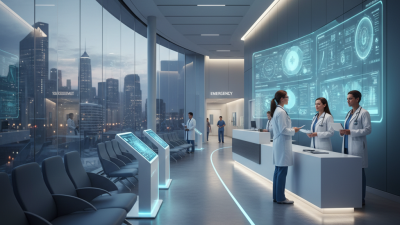
What is Healthcare Technology Solutions and How Can They Help?
In today's rapidly evolving medical landscape, healthcare technology solutions play a crucial role. These tools are designed to improve patient care and streamline operations. Hospitals and clinics increasingly rely on technology to enhance their services. For instance, electronic health records (EHR) allow for efficient data management. This can lead to better diagnosis and treatment plans.
However, the implementation of healthcare technology solutions is not without challenges. Many practitioners face resistance to change from their teams. There may be concerns about data privacy and security as well. Addressing these issues requires ongoing training and support. It’s essential to ensure that staff understands the benefits of adopting new technologies.
Moreover, technology alone is not a cure-all. It should complement human expertise, not replace it. While healthcare technology solutions can greatly assist in decision-making, they should be used judiciously. A balance must be found between reliance on technology and the irreplaceable value of personal interaction in patient care.

Understanding Healthcare Technology Solutions: An Overview
Healthcare technology solutions encompass a broad range of innovations improving patient care and operational efficiency. According to a report by the World Health Organization, telemedicine has surged in use, with a 154% increase in telehealth visits during the COVID-19 pandemic. This shift demonstrates how technology can bridge gaps in access, enabling healthcare providers to deliver services remotely. Yet, reliance on technology raises concerns about data privacy and cyber security, as health records become prime targets for cyber attacks.
One notable area of growth is in electronic health records (EHR) systems. A study found that 85% of physicians now utilize EHRs, up from 42% in 2009. This transition has streamlined patient information management but has also revealed challenges in interoperability. Many systems struggle to communicate effectively, leading to fragmented care. Furthermore, a reported 30% of healthcare professionals express concerns about the time spent on documentation, which can detract from patient interaction.
Wearable devices also represent a significant development in healthcare technology. A survey by Deloitte indicated that over 50% of consumers are interested in using wearables for health monitoring. While these devices offer valuable data for preventive care, questions persist about their accuracy and reliability. The need for standardization and validation remains critical to ensure the information provided is both useful and trustworthy.
Key Components of Healthcare Technology Solutions
Healthcare technology solutions encompass a range of tools designed to enhance patient care and streamline operations. Electronic Health Records (EHRs) are a core component. According to the Office of the National Coordinator for Health Information Technology, nearly 96% of US hospitals now use EHRs, transforming how patient data is managed. These systems enable real-time access to patient information, crucial for informed decision-making.
Telemedicine is another vital segment. A report from Global Market Insights indicates that the telemedicine market is projected to reach over $175 billion by 2026. This technology allows doctors to consult with patients remotely, improving access to healthcare. In rural areas, where medical professionals are scarce, telemedicine bridges the gap, although its reliance on stable internet access raises concerns about equity.
Data analytics tools also play an important role. They help healthcare providers interpret vast amounts of data, identifying trends and improving outcomes. However, many hospitals struggle with data overload, leading to decision paralysis. Effective implementation of these technologies is often hampered by training deficiencies and resistance to change, highlighting the need for continuous professional development in the sector.
Benefits of Healthcare Technology Solutions in Modern Medicine
Healthcare technology solutions are advancing the landscape of modern medicine significantly. These solutions enhance patient care, streamline operations, and improve health outcomes. According to a 2021 report by the MarketsandMarkets research firm, the global digital health market is expected to reach about $509.2 billion by 2025. This rapid growth emphasizes the increasing reliance on technology in healthcare.
Benefits of these solutions are evident. Electronic health records (EHRs) allow for quick access to patient data, reducing errors in treatment. A study published in JAMA Network Open found that EHRs can result in a 30% reduction in medication errors. Telemedicine, another vital aspect, improves access to care, especially for remote patients. In fact, a 2022 survey indicated that 60% of healthcare providers believe telehealth has improved care quality.
However, despite these positives, challenges exist. Not all patients are comfortable using technology, leading to potential disparities in care. Health professionals need ongoing training to use new systems effectively. Addressing these issues is essential for maximizing the benefits of healthcare technology solutions.
Consider implementing smaller tech changes gradually in practice settings. Start with training sessions and obtain direct feedback from staff. This approach fosters acceptance and can highlight any resistance to technology before larger rollouts occur. Prioritize user-friendly systems to ease the transition for both providers and patients.
Benefits of Healthcare Technology Solutions in Modern Medicine
Challenges and Considerations in Implementing Healthcare Technology
Implementing healthcare technology solutions can bring significant benefits, but it also presents various challenges. One of the primary issues is interoperability. Different systems often do not communicate well, creating data silos. This lack of integration can hinder patient care and lead to errors. Moreover, adapting to new technology requires training staff, which can be time-consuming and costly.
It’s crucial to consider the user experience when adopting new systems. If healthcare professionals find a solution cumbersome, they may resist its implementation. Conducting user tests before full deployment can help identify potential pitfalls. Gathering feedback early allows for necessary adjustments, enhancing user satisfaction and efficiency.
Data security is another pressing concern. With increasing cyber threats, ensuring patient information remains confidential is vital. Implementing strong security protocols is non-negotiable. Regular training on best practices in data management can mitigate risks. Health organizations must remain vigilant and proactive in tackling these issues to realize the full potential of technology solutions.
What is Healthcare Technology Solutions and How Can They Help? - Challenges and Considerations in Implementing Healthcare Technology
| Dimension |
Description |
Challenge |
Consideration |
| EHR (Electronic Health Records) |
Digital version of patients' paper charts. |
Data privacy concerns. |
Ensure compliance with HIPAA regulations. |
| Telemedicine |
Remote diagnosis and treatment through communication technology. |
Technical barriers for some patients. |
User-friendly platforms for all age groups. |
| Wearable Health Devices |
Devices that monitor health metrics in real time. |
Integration with existing health systems. |
Interoperability standards and protocols. |
| Healthcare Analytics |
Analysis of health data to improve outcomes. |
Data accuracy and reliability. |
Robust data governance frameworks. |
| Patient Portals |
Online platforms for patients to access their health information. |
User engagement and adoption rates. |
Intuitive design and educational resources. |
Future Trends in Healthcare Technology Solutions and Innovations
The future of healthcare technology solutions is incredibly dynamic. As innovations emerge, they promise to reshape patient care, improve outcomes, and streamline operations. Telehealth is gaining traction, allowing remote consultations and monitoring. This can enhance access for patients in rural areas but may leave some behind who lack resources or digital literacy.
Artificial intelligence is another area of growth. AI can analyze patient data efficiently and identify trends that health professionals might miss. However, there are concerns about data privacy and the potential for bias in algorithms. Trust in these technologies is crucial.
Wearable devices are increasingly common for tracking health metrics in real-time. They empower individuals to take control of their health. But not everyone feels comfortable with constant monitoring. The balance between health benefits and privacy must be navigated carefully. As we move forward, addressing these challenges will be essential for successful adoption of these healthcare technologies.