Top 10 Medical Gas Equipment Manufacturers Worldwide

Medical gas equipment is easy to overlook until a pressure alarm sounds or a treatment area needs dependable oxygen. Behind the wall outlets are compressors, vacuum systems, manifolds, alarms, valves, and miles of carefully planned piping. Each component must work as part of a larger system. Small differences in design, service access, and monitoring can matter greatly in daily care.

Healthcare facilities safety expert George Mills has emphasized disciplined risk management in healthcare environments. A fair paraphrase of that principle for medical gas systems is: “Reliable care depends on maintained equipment, clear procedures, and people who know what to check.” This is a paraphrase, not a verified verbatim quotation. It points to an important limit of any manufacturer ranking: a product alone cannot guarantee safe operation. Installation, staff training, maintenance, and local clinical needs also shape performance.

This guide examines ten Medical gas equipment manufacturers worldwide, comparing their product ranges, technical capabilities, service networks, and market presence. Readers may find familiar global brands alongside companies with narrower regional footprints. That difference matters. A broad catalog can be useful, but nearby technical support may matter more when a site needs help quickly. Rankings also simplify a complex field; they cannot replace engineering review or facility-specific evaluation. Some details deserve a second look. The strongest choice is not automatically the largest supplier, but the one whose documented capabilities fit the healthcare facility’s needs.
Top 10 Medical Gas Equipment Manufacturers Worldwide

Medical Gas Equipment: Purpose, Systems, and Essential Components

Medical gas equipment supports clinical tasks that depend on a controlled supply of gases or vacuum. Oxygen may support respiratory care, while medical air serves equipment and patient-care applications. Vacuum systems remove fluids and support suction. Each service has distinct requirements, so outlets and connections must be clearly identified and compatible with their intended use.

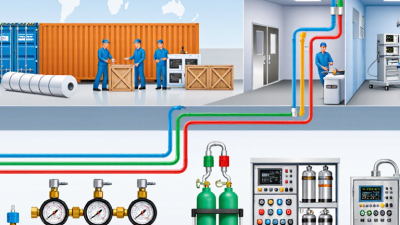
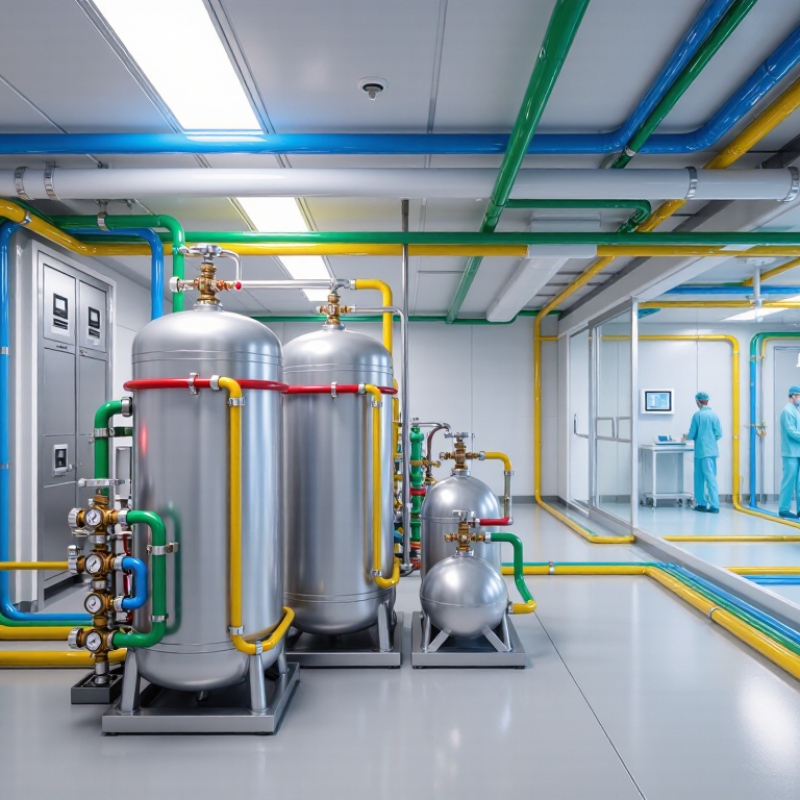
A typical system includes a source, pressure controls, distribution piping, alarms, and terminal outlets. Gas may come from cylinders or a centralized supply; medical air and vacuum may use dedicated plant equipment. Regulators manage pressure, while zone valves allow sections to be isolated for maintenance or emergencies. Alarms help staff notice abnormal pressure or supply conditions. Small details matter. A poorly labeled valve can create confusion when seconds count.

Safe performance depends on more than selecting components. Installation quality, documented testing, routine inspection, and staff familiarity all influence reliability. In practice, maintenance access can be overlooked when a plant room is crowded, even though filters and regulators need attention. More equipment does not automatically mean a safer system. Design choices should reflect the facility’s clinical needs, expected demand, and applicable technical standards. No system is perfect; recurring checks help reveal weaknesses before they affect care.

How the Worldwide Manufacturer List Is Evaluated

A credible worldwide manufacturer list should be evaluated through evidence, not visibility. The review should compare product range, documented quality systems, production capacity, service coverage, and the availability of replacement parts. WHO’s 2021 oxygen emergency assessment estimated that global needs could reach about one million cylinders daily at the pandemic peak. That scale makes delivery capacity and continuity important—not just catalogue size.

Technical checks should consider equipment used across the supply chain, including oxygen sources, manifolds, pressure regulators, alarms, and pipeline components. Reviewers should verify published specifications, independent test records, and maintenance guidance, then check whether support reaches hospitals beyond major cities. Details matter. A manufacturer with broad distribution may still have gaps in local servicing or spare-parts availability.

The scoring method should disclose its sources, weighting, and review date. Otherwise, two strong manufacturers may appear different simply because one publishes more information. A ranking is a screening tool, not a safety certification. It also has limits: public records cannot fully show how equipment performs during years of heavy use. That deserves scrutiny.

Top 10 Medical Gas Equipment Manufacturers Worldwide - How the Worldwide Manufacturer List Is Evaluated

Evaluation framework: The criteria below describe a transparent method for assessing manufacturers; they are not company-specific scores or a verified ranking. Supporting evidence should be checked against current product documentation, certificates, and applicable regulations.

No. Evaluation Dimension Suggested Weight Evidence to Review Assessment Focus
1 Regulatory and quality-system compliance 18% Current, product- and market-relevant certificates; quality-system documentation, such as ISO 13485 certification where applicable; regulatory records for the intended sales markets. Verify certificate scope, issuing body, validity, and whether it covers the relevant products and manufacturing sites.
2 Standards alignment and technical documentation 14% Product specifications, declarations, test reports, installation instructions, and documented alignment with applicable requirements, such as ISO 7396-1 for medical gas pipeline systems or NFPA 99 where relevant. Check that standards are applicable to the product and jurisdiction; do not treat a standards reference alone as proof of certification.
3 Product range and system coverage 12% Catalogues and technical data for relevant equipment categories, such as gas sources, pipeline components, alarm systems, terminal units, and associated control equipment. Assess documented product coverage and compatibility without assuming that every manufacturer supplies every category.
4 Safety and risk-management evidence 12% Risk-management files, safety instructions, test documentation, alarm specifications, and records addressing intended use and foreseeable hazards. Look for traceable safety evidence, clear operating limits, and appropriate safeguards for the product type.
5 Manufacturing controls and traceability 10% Auditable information on production controls, inspection and testing, supplier controls, batch or serial traceability, and handling of nonconforming products. Evaluate whether quality controls are documented and consistently linked to the products being assessed.
6 Clinical-facility installation and integration support 9% Project documentation, system design guidance, commissioning procedures, interface details, and records of installation or integration support. Assess the clarity and availability of support for safe integration into healthcare-facility systems.
7 Service, maintenance, and spare-parts support 8% Published service procedures, maintenance instructions, spare-parts information, warranty terms, and documented service coverage. Compare the stated support arrangements for the relevant region and product lifecycle.
8 Product performance and verification 7% Test reports and technical data for relevant performance characteristics, such as pressure or flow specifications, alarm functions, and operating conditions. Use comparable, product-specific evidence; avoid substituting marketing claims for test results.
9 Documented market experience 6% Verifiable project references, public tender records, case studies, or other independently checkable evidence of installations in healthcare settings. Consider relevance and verifiability of references rather than relying on unsubstantiated claims of market leadership.
10 Transparency and responsiveness 4% Availability of current technical documents, clear product identification, accessible support channels, and timely responses to technical enquiries. Assess whether buyers can obtain the information needed for evaluation, installation, operation, and maintenance.
Total Suggested Weight 100% Apply the same evidence rules and scoring scale to every manufacturer under review.

Profiles of Ten Leading Medical Gas Equipment Manufacturers

The medical gas equipment field includes manufacturers with very different strengths. One focuses on central gas source systems, designing equipment rooms around compressors, dryers, and clear service access. Another specializes in manifold assemblies, where dependable changeover and readable pressure gauges matter during routine checks. A third builds pipeline components, including zone valves and terminal outlets suited to busy clinical spaces. Details count.

A fourth manufacturer concentrates on medical air and vacuum systems, with attention to noise, heat, and maintenance access. A fifth develops oxygen delivery equipment for facilities with varied supply needs. A sixth produces alarm and monitoring systems that help staff identify pressure changes quickly. A seventh makes regulators and flow-control devices, where precise adjustment and durable fittings are essential. Small parts matter.

An eighth manufacturer offers modular plant-room packages, useful when space or installation time is limited. A ninth focuses on pipeline testing and commissioning equipment, supporting checks before systems enter service. A tenth combines equipment with technical support, training, and spare-parts planning. That can matter as much as the hardware. These profiles describe areas of expertise, not a verified ranking. Buyers should examine product documentation, service coverage, applicable standards, and maintenance requirements. A polished brochure cannot show every weakness; that deserves thought.

Comparing Product Portfolios, Certifications, and Global Reach

Medical gas equipment manufacturers differ less by catalog size than by how well their systems support clinical workflows. Compare source equipment, manifolds, alarm panels, area valve assemblies, terminal units, and pipeline components as one portfolio. A broad catalog can simplify procurement, but only when interfaces, documentation, and service responsibilities remain clear. Check whether certificates cover the exact products and manufacturing sites under review. Certificates matter. Ask for traceable test records, clear installation instructions, spare-part availability, and practical training for maintenance teams.

Global reach means more than export destinations. Can local technicians respond promptly, and are replacement components stocked nearby? Review service coverage, language support, training options, and response commitments in each target market. A shipping map looks impressive. Not enough. Independent verification helps distinguish documented capability from confident sales language. Compare suppliers using the same criteria, then discuss gaps with clinical engineering teams. No score captures every tradeoff. This comparison is imperfect: market requirements and hospital layouts differ, while brochures may omit inconvenient details.

Key Factors Shaping the Medical Gas Equipment Industry

Medical gas equipment demand is shaped by more than hospital construction. Aging populations, respiratory disease, surgical capacity, and expanded critical-care services all increase the need for reliable oxygen, vacuum, and compressed-air systems. Grand View Research’s Medical Gas and Equipment Market report estimated the global market at about US$17 billion in 2023, with growth projected at roughly 7% annually through 2030. These are forecasts, not guarantees; market estimates also vary with each report’s product definitions.

Technology is changing purchasing priorities. Hospitals increasingly seek alarm systems that identify pressure drops, leaks, and supply interruptions before they affect care. Pipeline design, outlet placement, cylinder storage, and backup sources require careful coordination with clinical teams. ISO 7396-1 provides requirements for medical gas pipeline systems, while local codes and facility needs also shape projects. Reliability matters most. Yet equipment upgrades can be difficult for older facilities, where cramped service rooms and aging pipes complicate installation. That gap matters. WHO has described medical oxygen as an essential medicine, underscoring why supply continuity deserves attention alongside efficiency. Growth forecasts alone cannot show whether smaller or rural hospitals can afford maintenance, staff training, and dependable backup capacity.

Top 10 Medical Gas Equipment Manufacturers Worldwide — Key Factors Shaping the Medical Gas Equipment Industry

Global health expenditure provides context for investment in healthcare infrastructure, including medical gas systems. It is an industry-demand proxy, not a measure of medical gas equipment sales.

Source: World Bank, World Development Indicators — Current health expenditure (% of GDP), indicator SH.XPD.CHEX.GD.ZS.