What Are the 2026 Top Stainless Medical Tables?
What Are the 2026 Top Stainless Medical Tables? This question requires more than a polished product list. Hospitals need tables that withstand repeated cleaning, daily impact, heavy instruments, and constant movement. The best Stainless medical tables should combine corrosion resistance, stable construction, smooth welds, practical storage, and dependable casters. Small details matter. A rounded corner can reduce residue. A sealed joint can simplify disinfection.
Dr. William A. Rutala, a recognized healthcare environmental hygiene expert, stated, “The environment plays an important role in the transmission of healthcare-associated pathogens.” His observation gives this comparison a clear direction. A medical table is not merely a metal surface. It becomes part of the clinical environment, especially when staff clean it between procedures. For 2026, 304 stainless steel may remain suitable for many general applications, while 316 stainless steel can offer stronger resistance in demanding or corrosive settings. Yet material grade alone does not guarantee quality.
Look beyond the label.
This guide examines load capacity, height adjustment, wheel performance, cleanability, fabrication quality, and supplier transparency. It also considers user experience, because an attractive table may still feel awkward during long procedures. Some rankings may change when manufacturers publish incomplete specifications. That limitation deserves honesty. No single model fits every clinic, laboratory, or treatment room. The strongest choice depends on workload, cleaning routines, room layout, and maintenance support. These practical factors will shape the 2026 Stainless medical tables landscape more than marketing language.
Definition and Purpose of Stainless Medical Tables
What Are the 2026 Top Stainless Medical Tables?
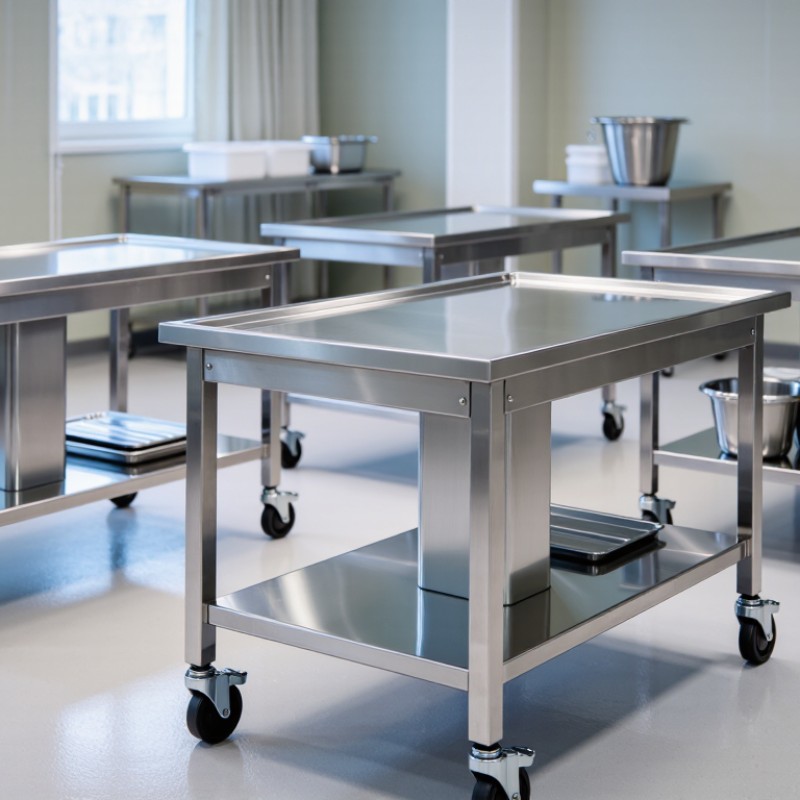
A stainless medical table is a cleanable, load-bearing surface used in hospitals, clinics, laboratories, and treatment rooms. It may support instruments, trays, specimens, or sterile supplies. Its purpose is practical: organize work, reduce clutter, and withstand frequent disinfection. Most models use stainless steel grades such as 304, while harsher chemical environments may require 316 steel. The choice should follow actual exposure, not fashion.
Hygiene is central. The WHO Global Report on Infection Prevention and Control, published in 2022, estimates that 7 out of 100 patients in high-income countries acquire at least one healthcare-associated infection during care. In low- and middle-income countries, the estimate rises to 15 out of 100. A smooth, welded surface can reduce dirt traps, but it cannot replace proper cleaning procedures. That distinction matters.
Design also affects daily safety. Rounded corners, adjustable height, locking casters, and a raised edge help control spills and movement. The CDC’s Guidelines for Environmental Infection Control in Health-Care Facilities emphasize cleanable surfaces and correct disinfection practices. A table should therefore tolerate repeated wiping without rusting, loosening, or developing hidden gaps. In practice, some tables look highly professional yet wobble under moderate loads. That is a design failure, not a minor inconvenience. The most suitable 2026 stainless medical table is defined by purpose, verified load capacity, surface quality, and compatibility with the facility’s cleaning routine.
Key Features That Define Top Medical Tables in 2026
What Are the 2026 Top Stainless Medical Tables?
Top stainless medical tables in 2026 are defined by cleanability, stability, and measurable usability. The WHO Global Report on Infection Prevention and Control estimates that 7 in 100 acute-care patients in high-income countries acquire at least one healthcare-associated infection. This makes smooth, sealed surfaces more than a design preference.
A strong table should use corrosion-resistant stainless steel, preferably with welded joints and rounded corners. These details reduce soil traps around legs, shelves, and edges. The CDC’s Guidelines for Environmental Infection Control in Health-Care Facilities emphasize compatible cleaning and disinfection procedures for noncritical equipment surfaces. Therefore, a table should tolerate repeated chemical exposure without peeling coatings or developing rust spots. Adjustable, non-marking feet improve stability on uneven floors. A documented load rating matters too. It prevents staff from guessing.
Ergonomics deserves equal attention. OSHA identifies awkward postures and manual handling as common contributors to workplace injuries. Height adjustment, adequate knee clearance, and lockable casters can reduce unnecessary reaching. I would still question tables with excessive accessories. More parts can mean more cleaning points.
Tips: Check weld quality under bright light. Test one-handed height adjustment while wearing gloves. Confirm the surface remains stable when a loaded tray is moved across it. Also, verify the cleaning agent compatibility. “Stainless” does not mean maintenance-free.
Leading Types of Stainless Medical Tables and Their Uses
Stainless medical tables serve different clinical tasks, and their design should match the workflow. Instrument tables support sterile supplies during procedures. Their smooth tops, raised edges, and locking casters help reduce accidental movement. Some facilities choose height-adjustable models for better ergonomic control. However, adjustment mechanisms can create cleaning gaps if poorly designed.
Treatment and examination tables support wound care, minor procedures, and patient assessments. They often include shelves, removable trays, or adjustable sections for equipment access. Utility worktables handle preparation, sorting, and temporary storage in treatment rooms or laboratories. A 304 stainless steel surface suits many general environments, while 316 stainless steel may offer stronger resistance in wet or chemically demanding areas. Material choice still depends on cleaning agents and facility conditions.
Overbed tables assist patients with meals, documents, and portable equipment. They need stable bases, smooth height adjustment, and edges that do not catch linens. Mobile instrument stands are useful when clinicians need supplies close to the operating area. In practice, rounded corners and fully welded joints make a noticeable difference during daily disinfection. Still, a bright surface does not guarantee hygiene. Hidden casters, undersides, and drain areas require equal attention. I would also question tables selected only for appearance, because poor load ratings or awkward brakes can slow care. Check dimensions, weight capacity, corrosion resistance, and cleaning compatibility before purchase.
What Are the 2026 Top Stainless Medical Tables?
Stainless medical tables are selected according to workflow, available space, hygiene requirements, and the equipment being handled. The chart compares representative tabletop dimensions commonly used for major stainless-steel medical table types.
How to read the chart: Mayo tables are compact and designed for instruments placed beside an operating table. Instrument and utility tables provide flexible work surfaces for procedure rooms and laboratories. Back tables offer larger surfaces for sterile supplies, while treatment tables support general examination and clinical preparation tasks. Actual sizes may vary according to facility standards and clinical requirements.
Materials, Hygiene Standards, and Safety Considerations
In 2026, top stainless medical tables will be judged by hygiene, not appearance alone. Surgical-grade 304 stainless steel suits many clinical rooms. Grade 316 offers stronger resistance to chlorides and harsh cleaning chemicals. However, material selection cannot replace proper maintenance. Welded seams, rounded corners, and smooth surfaces reduce soil traps. A mirror finish may look impressive, but it can still hide scratches.
The WHO Global Report on Infection Prevention and Control 2022 found that 7 in 100 acute-care patients in high-income countries acquire at least one healthcare-associated infection. The figure reaches 15 in 100 in low- and middle-income countries. These figures make cleanable equipment essential. CDC environmental infection-control guidance recommends regular cleaning and disinfection of high-touch surfaces. Facilities should verify chemical compatibility, contact time, and residue removal. Some tables fail here. Their casters, undersides, and adjustment handles are often overlooked.
Tips: Choose tables with sealed welds, removable accessories, and clearly stated load ratings. Check casters before every procedure. Lock them firmly. Avoid damaged surfaces, even when the damage seems minor. Follow the disinfectant manufacturer’s instructions and document inspections. ISO 14971 risk-management principles also support reviewing tipping, pinch points, electrical accessories, and patient-transfer hazards. A practical evaluation should include a gloved cleaning test under real workflow conditions. Staff feedback matters. A technically excellent table can still be unsuitable when its height, weight, or controls slow safe care.
| Table Type | Typical Clinical Use | Recommended Stainless-Steel Material | Typical Construction and Size Range | Hygiene and Cleanability Features | Representative Load Range | Key Safety Considerations | Relevant Technical References |
|---|---|---|---|---|---|---|---|
| Stainless Instrument Table | Preparing and holding sterile instruments in operating rooms, procedure rooms, and treatment areas. | AISI 304 stainless steel is suitable for most indoor clinical environments; AISI 316 or 316L is preferred where chloride exposure is frequent. | Welded tubular frame, three- or four-sided top edge, approximately 600–1,200 mm wide and 400–700 mm deep. | Seamless or continuously welded joints, radiused corners, smooth polished surface, removable shelf where applicable, and no exposed hollow openings. | Commonly specified at approximately 50–150 kg evenly distributed; the supplier’s tested rating must govern. | Lockable casters, stable four-point support, rounded edges, secure shelf retention, and compatibility with the facility’s disinfection chemicals. | ASTM A240/A240M for stainless sheet and plate; ASTM A967/A967M for chemical passivation practices where specified. |
| Mobile Mayo Stand | Supporting instruments close to the operating field during surgery and invasive procedures. | AISI 304 or 316L stainless steel; 316L offers improved resistance to chloride-containing cleaning residues. | Height-adjustable tray, telescoping post, and a five-caster base; typical tray dimensions are approximately 450–600 mm by 350–500 mm. | One-piece tray with raised spill-control rim, smooth welds, cleanable adjustment components, and minimal crevices. | Often approximately 10–25 kg on the tray, depending on the design and adjustment height. | Anti-tip base geometry, reliable height-locking mechanism, conductive or nonconductive caster selection as required, and inspection of fasteners before use. | ASTM A240/A240M; facility infection-prevention procedures should define approved cleaning and disinfection agents. |
| Stainless Treatment Table | Patient examination, minor procedures, wound care, and treatment-room use. | AISI 304 stainless steel frame and support structure; corrosion-resistant coated or stainless accessories may be used according to the design. | Fixed or adjustable-height frame, padded mattress or removable top, and typical overall length of approximately 1,800–2,100 mm. | Sealed, nonabsorbent upholstery; welded frame; rounded perimeter; removable cushions; and surfaces that tolerate repeated cleaning. | Common working ratings range from approximately 150–250 kg, including the patient and accessories; verify the tested safe working load. | Anti-slip feet or lockable casters, safe working-height adjustment, load-rated hinges, side clearance to prevent finger trapping, and secure patient positioning. | Applicable medical-device or furniture requirements depend on the table’s function and powered features; risk controls should be documented under ISO 14971 where applicable. |
| Height-Adjustable Procedure Table | Procedures requiring ergonomic access for clinicians or variable patient positioning. | AISI 304 or 316L stainless steel for exposed structural parts; stainless fasteners are preferred in wet-cleaning environments. | Manual, hydraulic, or electrically powered height adjustment; typical working height is approximately 600–1,000 mm, depending on configuration. | Closed columns, protected actuators, sealed controls, smooth top surfaces, and accessible areas for visual inspection and cleaning. | Frequently specified at approximately 180–300 kg, subject to position, center of gravity, and manufacturer testing. | Mechanical stops, anti-crush protection, emergency lowering where powered, stable base width, caster locks, and prevention of unintended movement. | IEC 60601-1 may apply to electrically powered medical electrical equipment; electrical safety requirements depend on the complete equipment classification. |
| Stainless Utility or Dressing Table | Preparing dressings, storing frequently used supplies, and supporting general clinical workflow. | AISI 304 stainless steel is generally appropriate for indoor healthcare areas; 316L is beneficial in high-humidity or saline environments. | One or two shelves, optional drawers, welded frame, and typical widths of approximately 600–1,500 mm. | Flush-mounted shelves, sloped or radiused corners, fully welded joints, drawer fronts without dirt traps, and smooth surfaces with no flaking coatings. | Typical total shelf capacity is approximately 75–250 kg, with individual shelf ratings stated separately. | Anti-racking frame, evenly distributed loading, lockable casters when mobile, drawer stops, and wall clearance where tipping could occur. | ASTM A240/A240M; material certificates such as EN 10204 may be requested for traceability. |
| Stainless Sink or Scrub Table | Hand preparation, instrument rinsing, utility cleaning, and controlled wet-area tasks. | AISI 316L is often preferred for wet areas and exposure to cleaning chemicals; AISI 304 may be adequate when water quality and chemical exposure are controlled. | Integrated basin, backsplash, drain assembly, and welded countertop; dimensions vary according to basin count and workflow. | Sloped drainage surfaces, sealed backsplash joints, coved internal corners, accessible trap, splash control, and smooth nonporous surfaces. | Load is commonly specified by basin and countertop section; a representative countertop rating is approximately 100–250 kg evenly distributed. | Backflow protection, safe hot-water temperature control, slip-resistant floor interface, rounded basin edges, and prevention of standing water. | Local plumbing and backflow-prevention codes apply; stainless material and fabrication may be specified to ASTM A240/A240M. |
| Stainless Equipment Stand | Supporting monitors, small clinical devices, sterilization accessories, or laboratory equipment. | AISI 304 stainless steel for standard indoor use; AISI 316L where frequent disinfectant or saline exposure is expected. | Open-frame or enclosed cabinet design, adjustable shelf options, cable-management openings, and custom equipment footprints. | Sealed tops, radius corners, removable panels, protected cable routes, minimal horizontal ledges, and cleanable ventilation openings. | Commonly approximately 75–300 kg total, with separate ratings for shelves and mounting surfaces. | Center-of-gravity assessment, anti-tip restraints, lockable casters, cable strain relief, ventilation clearance, and grounding or bonding when required by the equipment. | IEC 60601-1 may apply to the powered medical equipment installed on the stand; the stand itself must be assessed for mechanical stability and intended use. |
| Stainless Instrument Cart | Transporting sterile sets, supplies, specimens, or used instruments between designated clinical areas. | AISI 304 stainless steel for general healthcare transport; AISI 316L is preferable for aggressive cleaning environments. | Two- or three-level cart, optional doors or drawers, push handle, and four or five casters; typical shelf depth is approximately 400–600 mm. | Continuous welds, sealed shelves, smooth push handle, removable trays, rounded corners, and separation of clean and used workflows. | Typical total capacity is approximately 150–400 kg, depending on caster size, frame design, and floor conditions. | Directional or braking casters, ergonomic push height, anti-tip loading, controlled maximum speed, and dedicated cleaning between clean and contaminated use. | ASTM A240/A240M; local infection-control policies should define decontamination, transport, and segregation procedures. |
Specification note: Load ranges and dimensions are representative procurement values, not universal limits. Final selection should be based on verified test data, intended use, cleaning-agent compatibility, electrical classification where applicable, and the healthcare facility’s local codes and infection-prevention procedures.
How to Select the Right Stainless Medical Table for Each Setting
The 2026 top stainless medical tables are not identical for every clinical setting. Their value depends on workflow, cleaning demands, patient weight, and available space. A treatment room may need a height-adjustable table with rounded edges. A laboratory usually needs a rigid, level surface for instruments. Measure the doorway.
Choose stainless steel by examining its grade, weld quality, surface finish, and resistance to repeated cleaning. Smooth, polished surfaces reduce areas where moisture and residue can collect. However, mirror-like finishes can show scratches quickly. That detail is easy to overlook. Ask for material documentation, load ratings, care instructions, and verified test information before purchasing. Professional suppliers should provide clear specifications, not vague promises.
Mobility also changes the right choice. Locking casters help staff reposition a table, but weak brakes can create safety concerns during transfers. Fixed legs may provide better stability in procedure rooms. Check the working height beside existing beds, stools, and equipment. Leave enough clearance for cleaning tools and cables. A lower shelf can improve storage, yet it may obstruct movement in compact rooms. Review the table after a realistic shift, including spills, heavy trays, and rushed cleaning. The best selection is practical, though not always perfect. Test it with the people who will use it.
Related Posts
-
How to Choose Hospital Furniture Systems in 2026?
-

Top 10 Healthcare Equipment Solutions for Global Buyers?
-

China Top 10 Clinical Equipment Solutions for Healthcare Innovation?
-

Top Equipment Rail Systems of 2026 What to Know?
-

2026 Best Hospital Infrastructure Systems Buying Guide
-

How to Choose the Best Hospital Infrastructure Systems