
What Is a Ring Mechanism Manufacturer?
A ring mechanism looks simple: two metal loops, a hinge, and a pair of covers. Yet the small parts determine how smoothly a binder opens and how securely it holds paper. A Ring Mechanism Manufacturer designs and produces these components, often offering different ring shapes, sizes, capacities, and mounting styles. The right choice depends on the binder’s purpose, page count, and expected use.
That sounds straightforward. It can be fiddly. A hinge that feels stiff, unevenly aligned rings, or a rough edge may affect the finished product. Manufacturing checks can include ring alignment, opening and closing action, surface finish, and consistency between batches. Buyers should confirm which checks a supplier performs rather than assume every factory uses the same process.
This guide explains common ring mechanism types, typical materials, and the steps involved in production. It also considers customization, quality checks, and practical ways to assess a potential supplier. Useful questions include: What ring size is available? Which mounting pattern fits the binder? Can the manufacturer provide a sample for review? A sample helps reveal details that a specification sheet may miss, though one sample cannot represent every production run. Clear drawings, realistic tolerances, and direct communication make comparisons more reliable. The aim is not to treat every manufacturer as interchangeable, but to understand what the mechanism needs to do and how a supplier can demonstrate that it will.
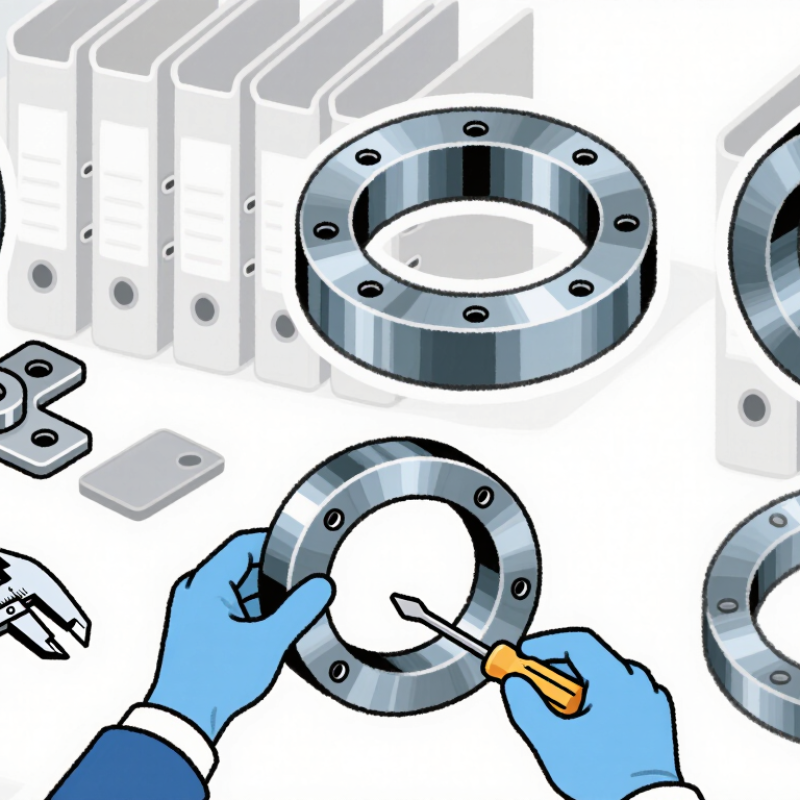
What a Ring Mechanism Manufacturer Is
A ring mechanism manufacturer designs and produces the metal hardware that holds loose sheets together. Its work may include shaping steel parts, attaching rings to a spine, and assembling levers or rivets. These mechanisms are used in binders, planners, sample books, and presentation folders. The function seems simple. But alignment matters. Rings that fail to meet evenly can snag pages or make them tear during everyday use. Some manufacturers supply only the mechanism, while others also provide related components.
A manufacturer’s role starts with the product requirements: ring shape, size, opening style, sheet capacity, and mounting method. Production teams turn those details into tooling and assembly steps, then inspect samples for smooth movement, consistent closure, and secure attachment. Small details count. Buyers can ask how materials and finishes are checked, and whether the mechanism has been tested in a representative cover. A drawing can look complete yet leave important questions unanswered, such as how much force the lever needs. No process is flawless, so clear communication and practical sample testing help uncover issues before a larger production run.
Types of Ring Mechanisms and Their Components
What Is a Ring Mechanism Manufacturer?
Types of Ring Mechanisms and Their Components
A ring mechanism manufacturer designs and assembles hardware that holds loose pages in binders, presentation folders, and sample books. Different formats serve different tasks. Two-ring mechanisms suit compact files, while three- and four-ring layouts spread page weight across the spine. Round rings let pages turn smoothly and work well for everyday documents. D-shaped rings keep sheets aligned against a straighter edge, often providing more usable capacity. Lever-arch mechanisms use a lever and compressor bar to secure thicker stacks. Small parts matter.
A typical mechanism includes metal rings, a spine plate, rivets, and a release trigger or lever. The spine plate attaches the assembly to a cover, while rivets hold its moving parts together. Ring diameter affects capacity, but page size and paper thickness matter too. During quality checks, manufacturers can open and close the rings repeatedly, then inspect whether the ends meet evenly. Misalignment may snag paper. This detail is easy to overlook. A stronger mechanism is not always the best fit; an oversized assembly can make a slim folder awkward to carry.
Ring Mechanism Types and Their Ring Counts
Ring mechanisms are commonly identified by the number of rings they hold: two, three, or four. A typical mechanism also includes a metal base plate, an opening lever or trigger, and ring assemblies; exact components vary by design.
How Ring Mechanisms Are Designed and Manufactured
A ring mechanism manufacturer turns a filing requirement into a repeatable metal assembly. Design starts with the sheet size, ring count, ring diameter, and expected paper load. Engineers then select steel thickness and plan the hinge, rivets, and mounting holes. Small errors matter. A few millimeters of misalignment can make rings close unevenly or pages snag. The World Steel Association’s World Steel in Figures 2024 reports 1,892.2 million tonnes of crude steel production worldwide in 2023, underscoring the scale of the material supply behind stamped components.
Manufacturing commonly involves coil feeding, stamping, forming, deburring, surface finishing, and riveting. During trials, technicians check ring alignment, closure, and movement across repeated cycles. They may adjust the die or hinge geometry when samples bind; a polished prototype can still hide a weak joint. That deserves a second look. Automation can support consistency, but it does not replace inspection. The International Federation of Robotics’ World Robotics 2024 report counted 541,302 industrial robot installations worldwide in 2023. That figure describes manufacturing broadly, not ring-mechanism production specifically. A careful maker therefore validates each process on its own merits, checking finished parts with gauges and practical opening tests before approving a production run.
Materials, Quality Control, and Industry Standards
What Is a Ring Mechanism Manufacturer?
Materials, Quality Control, and Industry Standards
A ring mechanism manufacturer turns metal components into assemblies that open, close, and hold reliably. Material choice depends on load, moisture, finish, and expected use. Plated carbon steel is common; stainless steel can suit damp environments, though it may cost more. The International Stainless Steel Forum’s Stainless Steel in Figures 2024 reported global stainless-steel production of 58.4 million tonnes in 2023. That signals broad material availability, not a guarantee that a specific ring will resist corrosion.
Quality control should cover incoming material, forming, riveting, and final operation. A practical inspection checks ring alignment, closure gaps, sharp edges, and repeated opening cycles. ISO 9001 supports consistent quality-management processes, while ISO 2859-1 provides sampling procedures for lot inspection. Neither standard alone proves that a mechanism meets every buyer’s performance needs. Salt-spray testing, such as ASTM B117, can compare corrosion resistance under controlled conditions, but it does not predict exact service life. Small defects matter.
Tips: Ask for material specifications, coating details, inspection records, and cycle-test results. Request samples from the intended production process. A polished sample can hide variation in mass production; that deserves a second look.
What Is a Ring Mechanism Manufacturer? - Materials, Quality Control, and Industry Standards
| Area | Typical materials or features | Manufacturing and quality checks | Relevant standards or references |
|---|---|---|---|
| Manufacturer’s role | Produces mechanical ring assemblies used to hold punched sheets in binders, folders, and presentation products. | Typical operations include forming metal components, assembling rings and levers, finishing surfaces, and inspecting finished mechanisms. | Product requirements are generally defined by the buyer’s drawings, purchase specification, and intended use. |
| Base plate and housing | Commonly formed from low-carbon steel sheet; thickness and grade depend on the mechanism design and required rigidity. | Check material certificates when specified, sheet thickness, stamping quality, hole position, burrs, and plate flatness against the approved drawing. | Material grades should be verified against the applicable material specification; dimensional limits are normally product-specific. |
| Rings and moving parts | Steel wire or formed steel strip is commonly used for rings, levers, and linkages. Plating or another finish may be selected for appearance and corrosion resistance. | Inspect ring alignment, symmetry, opening and closing action, joint condition, sharp edges, and consistency across the set. | Ring geometry and operating-force acceptance criteria should be stated in the product drawing or inspection plan. |
| Rivets and fasteners | Steel rivets or other mechanically secured fasteners are used to attach components; the selected material and finish depend on the assembly design. | Check for secure joints, excessive looseness, deformation, interference with moving parts, and visible damage after assembly. | Fastener dimensions and joint performance are typically controlled by the drawing and validated through assembly checks. |
| Surface finish and corrosion | Finishes may include nickel or zinc-based plating, paint, or other specified coatings. The appropriate finish depends on the use environment and appearance requirements. | Inspect coating coverage, adhesion where specified, discoloration, scratches, and corrosion-test results when required by the purchase specification. | ISO 9227 describes neutral salt-spray testing methods. The test duration and pass criteria must be agreed for the specific product; the standard does not set one universal acceptance limit. |
| Dimensional inspection | Key characteristics may include overall length, plate width, mounting-hole spacing, ring diameter, and ring spacing. | Use suitable calibrated measuring equipment and approved drawings; record inspection results according to the defined control plan. | Tolerances are product-specific. ISO 2859-1 provides attribute-sampling procedures when an agreed sampling plan is used. |
| Functional testing | The mechanism should open and close as designed and hold the intended punched sheets without unintended release during normal use. | Check smooth actuation, ring-end alignment, secure locking where applicable, and performance over a specified number of operating cycles if required. | Cycle counts, load conditions, and pass/fail limits should be set in the buyer’s test protocol; there is no single universal test limit for all ring mechanisms. |
| Quality management | Documented controls may cover incoming materials, production processes, nonconforming products, corrective actions, and traceability. | A quality audit can review inspection records, calibration status, process controls, change management, and corrective-action evidence. | ISO 9001 specifies requirements for a quality management system; certification is organizational and does not by itself certify an individual product. |
| Restricted substances | Metal finishes and component materials may be subject to market-specific chemical restrictions and documentation requirements. | Request supplier declarations or test evidence appropriate to the product, material, market, and applicable legal requirements. | EU RoHS Directive 2011/65/EU, as amended, applies to specified electrical and electronic equipment categories; applicability to a ring mechanism depends on the product and its intended market. |
Note: Materials, tests, sampling plans, and acceptance limits vary by design, application, customer specification, and target market. Confirm the applicable requirements in the approved drawings and purchase documents.
Where Ring Mechanisms Are Used and How Manufacturers Are Chosen
A ring mechanism manufacturer produces the hinged metal assembly that holds punched pages inside binders, presentation folders, and sample books. These products serve schools, offices, archives, and manufacturers displaying fabric, paint, or packaging samples. FAO’s Global Forest Products Facts and Figures 2022 reports that worldwide paper and paperboard production reached about 401 million tonnes in 2022. That is a broad indicator of paper use, not a measure of binder demand. Still, it helps explain why dependable page-holding hardware remains useful.
Choose a manufacturer by checking ring alignment, opening force, rivet security, corrosion resistance, and performance after repeated use. Ask for samples and test them with the actual paper weight and page capacity; a mechanism that feels smooth when empty may bind when full. The U.S. EPA’s 2018 Advancing Sustainable Materials Management report puts the paper and paperboard recycling rate at 68.2%. This makes material separation worth discussing: metal mechanisms can complicate recycling if they are difficult to remove. No single test captures every real-world use. A practical supplier should provide clear material details, consistent inspection records, and support when dimensions or loading needs change.
