
What Is a Police Drone Detector and How Does It Work?
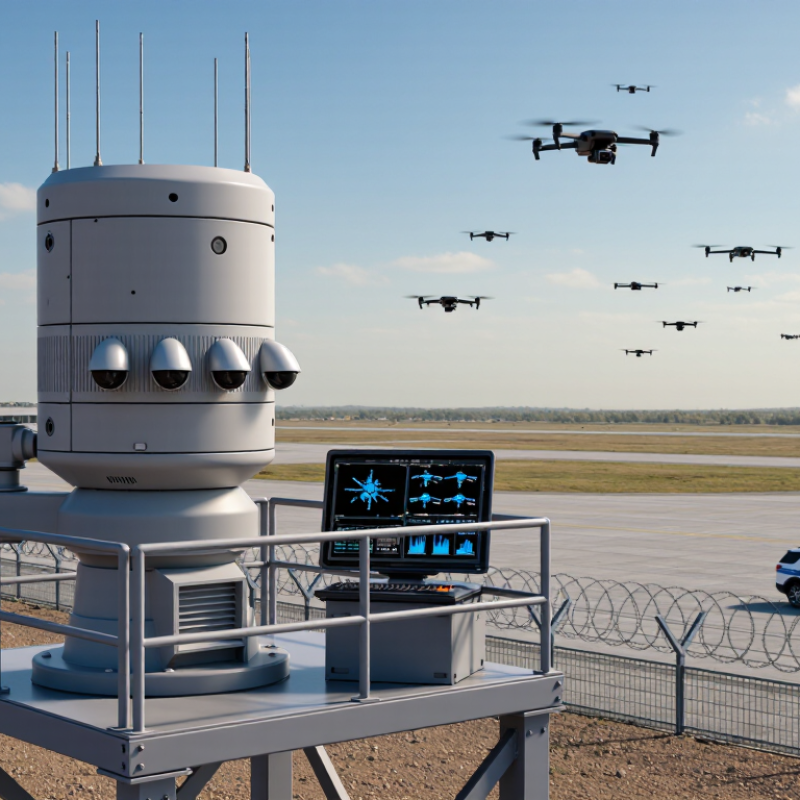
A Police Drone Detector is a security system designed to identify unmanned aircraft near sensitive areas. It can support public safety teams at airports, prisons, stadiums, and emergency scenes. Unlike a camera alone, the system may examine radio signals, flight-control patterns, sound, radar reflections, or visible movement. Some systems combine several methods. This improves awareness, but it does not guarantee perfect detection.
Radio-frequency sensors can recognize communication links between a drone and its controller. Remote identification signals may provide additional information when compatible aircraft transmit them. Radar can estimate distance, direction, and speed, while cameras help confirm the object visually. Acoustic sensors may detect propeller noise in quiet surroundings. Each method has weaknesses. Buildings, weather, interference, and crowded radio environments can reduce accuracy.
Reliable deployment requires trained personnel, documented procedures, and careful testing in the local environment. Security professionals should compare detector data with approved aviation information before taking action. A signal alert alone may not prove that a drone creates a threat. False alarms happen. That point deserves attention.
The most responsible systems support lawful observation and proportionate responses. They should protect privacy, limit data collection, and follow local aviation and public-safety requirements. Performance reports should record detection range, missed alerts, response time, and environmental conditions. These details turn marketing claims into measurable evidence. A Police Drone Detector is useful technology, but it remains one part of a broader safety plan. Human judgment still matters.
What Is a Police Drone Detector?
A police drone detector is a security device that helps authorized teams identify nearby unmanned aircraft. It does not control or disable a drone. Instead, it observes signals and physical activity around a protected area. The goal is simple: provide early awareness for public safety, event management, and emergency response.
Most detectors combine several sensing methods. Radio-frequency scanning can recognize communication links between a drone and its controller. Radar may detect a small moving object, while acoustic sensors listen for the distinct sound of rotating propellers. Some systems also use cameras or remote identification data. Each method has limits. Buildings, trees, weather, and crowded radio environments can reduce accuracy. A silent or automated drone may also be harder to locate. That detail is easy to overlook.
Tips: Choose equipment tested in realistic conditions, not only in open fields. Check detection range, alert speed, data protection, and maintenance needs. Operators should confirm alerts through more than one source before taking action. A single signal can be a false alarm. Keep written procedures for privacy, evidence handling, and communication with local authorities. Regular training matters, because software updates and new aircraft designs can change results. Field experience often reveals weaknesses that a product brochure does not.
Why Police Agencies Use Drone Detection Systems
A police drone detector is a system that helps agencies notice unmanned aircraft near protected areas. It may analyze radio signals, flight-control patterns, remote identification data, radar returns, or unusual movement in the sky. Some systems also use cameras and acoustic sensors. The detector does not automatically prove who operates the aircraft. It only provides clues that trained personnel must review.
Police agencies use drone detection systems to improve situational awareness during public events, emergency responses, and operations around sensitive facilities. A small aircraft can appear above a stadium, transport hub, or incident scene within minutes. Early notice gives officers time to assess safety risks, protect privacy, and coordinate with authorized aviation personnel. Clear alerts can also reduce unnecessary confusion among officers working on the ground.
Reliable use requires more than an alarm on a screen. Buildings, trees, weather, and nearby wireless equipment can create false readings. Detection is not identification. It can be wrong. Agencies should combine technical alerts with visual confirmation, documented procedures, and human judgment. Staff training matters, especially when several aircraft appear at once. I have found that simple displays often help teams respond better than crowded dashboards, although this may depend on the environment. Regular testing, careful data handling, and compliance with local aviation and privacy rules support responsible deployment.
How a Police Drone Detector Detects Unmanned Aircraft
What Is a Police Drone Detector and How Does It Work?
A police drone detector identifies unmanned aircraft by sensing their electronic and physical signals. Many systems begin with radio-frequency monitoring. They scan nearby bands for communication links between a drone and its controller. Software compares signal patterns, timing, and frequency changes with known flight-control behaviors. Some detectors can estimate direction by measuring when signals reach separate antennas.
Detection does not depend on radio signals alone. Radar may track a small moving object, while cameras confirm its shape and movement. Thermal sensors can help during darkness, although weather may reduce their accuracy. Acoustic sensors listen for the distinctive rhythm of rotating motors. A central platform combines these inputs and assigns a confidence level to each alert. Human operators then review the location, height estimate, and movement path before taking action.
The process sounds precise. It is not always perfect. Buildings, trees, reflections, and crowded wireless environments can create misleading readings. A detector may also notice a signal without proving which aircraft produced it. For that reason, trained personnel should compare multiple sensor results and record the conditions. Clear logs, calibrated equipment, and routine testing make the system more reliable. The best detection work is often quiet, patient, and cautious.
What Is a Police Drone Detector and How Does It Work?
Police drone detectors identify unmanned aircraft by monitoring radio-frequency activity, navigation signals, and sometimes radar, acoustic, or optical signatures. The chart shows representative frequency bands that may be relevant to radio-frequency detection. A detector does not need to receive every band, and actual frequencies vary by aircraft, region, and transmission mode.
Frequency ranges shown are representative allocations: 433 MHz ISM, GNSS L1 at approximately 1.575 GHz, the 2.4 GHz ISM band, and common 5 GHz WLAN/ISM spectrum. Radio-frequency detection can reveal control links or telemetry, while radar, cameras, and microphones can provide additional evidence when radio emissions are weak or absent.
How Drone Signals and Flight Data Are Analyzed
What Is a Police Drone Detector and How Does It Work?
How Drone Signals and Flight Data Are Analyzed
A police drone detector is a monitoring system that identifies nearby unmanned aircraft through radio signals, flight patterns, or electronic identification data. It does not automatically prove who controls the aircraft. Instead, sensors collect signals between the drone and its controller. These signals may include frequency, signal strength, timing, and location estimates. Some systems also read legally broadcast flight information, such as position, altitude, and identification details.
Software compares this data with known communication patterns. A stationary sensor may detect a changing signal near a public building. Several sensors can estimate the drone’s direction through signal arrival differences. Analysts then review the results on a map. They may compare altitude changes with wind, building height, and restricted airspace information. The process resembles careful evidence review, not a simple alarm.
Signal analysis has limits. A weak connection can produce uncertain location data. Buildings, weather, and other electronics may create confusing readings. Some aircraft may follow preplanned routes and transmit little usable information. False alerts remain possible. They should be checked by trained personnel and visual observers. Good practice also requires clear retention rules, access controls, and respect for personal privacy. The detector supports informed decisions; it should not replace human judgment. In real deployments, results can be incomplete, and that weakness deserves honest attention.
Key Technologies, Limitations, and Legal Considerations
A police drone detector is a lawful monitoring system designed to identify nearby unmanned aircraft. It may scan radio-frequency signals, recognize control patterns, or detect the aircraft itself through radar, cameras, and acoustic sensors. Some systems combine several methods. That matters. A signal-based detector may locate a controller, while radar may confirm movement in the sky. Identification is not always certain, especially near crowded wireless environments.
The technology has clear limitations. Buildings can block signals, and wind can weaken acoustic detection. Small aircraft may resemble birds or other moving objects on radar. Frequency changes, autonomous flight, and heavy urban interference can also reduce accuracy. False alerts waste resources. Missed detections create safety concerns. A neat dashboard can still hide uncertainty. For reliable decisions, trained operators should compare sensor data with time, location, weather, and visual evidence. Even then, the result may remain provisional.
Legal considerations are equally important. Authorities should follow applicable aviation, privacy, surveillance, and data-retention rules in their jurisdiction. Detection does not automatically justify tracking, interception, or seizure. Agencies should define a clear purpose, limit collection, protect stored information, and document access. Public notices or internal oversight may also be required. Rules differ between countries and local areas, so legal review should occur before deployment. My practical view is cautious: a detector can support public safety, but it should not replace human judgment, due process, or transparent accountability.
What Is a Police Drone Detector and How Does It Work? - Key Technologies, Limitations, and Legal Considerations
| Dimension | Technology or Issue | How It Works | Typical Information or Capability | Important Limitations |
|---|---|---|---|---|
| Basic definition | Police drone detector | A detection system used to identify, locate, track, or help classify unmanned aircraft near a protected area. | Alerts, estimated location, track history, direction of travel, and sometimes an assessment of the aircraft type. | Detection does not automatically prove who is operating the drone, whether it is dangerous, or whether an interception is lawful. |
| Radio-frequency detection | RF monitoring | Receivers scan for radio transmissions between an aircraft, controller, telemetry unit, or data link. Direction-finding antennas can estimate the signal’s bearing. | Possible presence of a control link, signal direction, transmission characteristics, and in some systems an estimated pilot or aircraft position. | Autonomous flights, encrypted links, frequency hopping, low-power signals, terrain, buildings, and radio interference can reduce detection or identification performance. |
| Radar detection | Short-range radar | Transmits radio waves and analyzes reflected energy to estimate an object’s range, bearing, altitude, and movement. | Continuous tracks and movement data, including objects that are not actively transmitting radio signals. | Small drones can have a limited radar signature. Birds, trees, rain, structures, ground clutter, and nearby moving objects may create false alarms. |
| Optical detection | Visible-light cameras | Cameras observe the sky and use image processing or human review to confirm a visual target. | Visual confirmation, approximate appearance, movement, and supporting evidence for an alert. | Performance depends on daylight, visibility, contrast, camera coverage, target size, and operator or software accuracy. |
| Thermal detection | Infrared cameras | Detects differences in infrared radiation and can help locate a drone or its propulsion system in low-light conditions. | Additional confirmation at night or in poor visible-light conditions. | Small aircraft may have weak thermal contrast. Weather, distance, atmospheric conditions, and background temperature affect results. |
| Acoustic detection | Microphone arrays | Multiple microphones analyze characteristic propeller and motor sounds and estimate the direction of arrival. | Audible-drone alerts and approximate bearing, especially when visual observation is difficult. | Wind, traffic, machinery, buildings, vegetation, distance, and quiet or modified aircraft can reduce accuracy. |
| Remote identification | Broadcast identification data | Where required and available, the aircraft broadcasts information such as an identifier and location data that compatible receivers can read. | A supporting link between a detected aircraft and transmitted identification or position information. | Availability and technical requirements vary by jurisdiction. Missing, inaccurate, spoofed, or unavailable broadcasts cannot be treated as conclusive proof. |
| Sensor fusion | Multi-sensor correlation | Software combines RF, radar, optical, thermal, acoustic, and identification data to compare tracks and reduce duplicate or isolated alerts. | A more complete operating picture and a confidence level for each track. | Incorrect sensor calibration, poor time synchronization, incomplete coverage, and algorithmic errors can still produce false positives or missed detections. |
| Detection range | Operational coverage | Range depends on sensor type, antenna height, terrain, frequency, target size, weather, line of sight, and local interference. | A site-specific coverage area rather than one universal detection distance. | Published maximum ranges are not guaranteed field performance. Low-altitude drones can be hidden by terrain and buildings. |
| Tracking and response | Alert management | The system generates an alert, displays the track, records relevant data, and may support visual verification and incident coordination. | Faster awareness, evidence preservation, and better coordination between authorized personnel. | A detector generally observes and reports; it does not automatically disable, seize, jam, or destroy an aircraft. |
| Privacy and data protection | Collection of signals and imagery | Cameras, microphones, and RF receivers may collect information about people, vehicles, communications, or nearby properties. | Operational awareness and incident documentation when collection is necessary and properly controlled. | Agencies may need a lawful purpose, access controls, retention limits, audit procedures, and safeguards against unnecessary collection. |
| Radio-frequency law | Spectrum compliance | Passive monitoring may be treated differently from transmitting, interfering with, or attempting to decode communications. | Legal operation depends on the receiver, frequencies, data collected, and applicable communications rules. | Jamming and unauthorized interference are restricted or prohibited in many jurisdictions, including for public-safety users unless specifically authorized. |
| Evidence and accountability | Logging and validation | System time, alerts, sensor outputs, operator actions, and maintenance records can be logged for review. | A traceable record that supports investigations, incident review, and performance testing. | Automated classifications should be independently verified before enforcement action. Logs must be protected from unauthorized alteration or disclosure. |
| Legal authority for intervention | Counter-drone actions | Actions such as interception, disruption, seizure, or disabling an aircraft require separate legal authority and operational rules. | A detector can inform a response decision but does not itself grant authority to take action. | Rules differ by country and agency. Potential issues include aviation safety, communications law, privacy, property rights, criminal procedure, and civil liability. |
Note: Performance and legal requirements vary by location, system configuration, mission, and applicable national or local law. Detection should be treated as an aid to trained personnel, not as conclusive identification by itself.
