
Top Natural Specimen Suppliers for Global Buyers
Global buyers increasingly seek Natural Specimen suppliers that combine scientific value, ethical practice, and dependable international service. A beautiful shell, mineral, pressed plant, or preserved insect is more than a decorative object. It carries information about habitat, collection methods, preservation, and provenance.
Sir David Attenborough, a respected natural history authority, once said, “No one is going to protect the natural world unless they understand it.” This idea guides responsible specimen sourcing. Reliable suppliers should explain where specimens originated, how they were obtained, and which documents accompany each shipment. Clear records build trust.
Quality is visible in small details. Labels should remain readable. Storage boxes should protect fragile surfaces. Moisture control matters during long-distance transport. Photographs should show actual condition, not only polished examples. Buyers also need practical answers about identification, preparation, packaging, and permitted trade.
This guide examines leading Natural Specimen suppliers for global buyers. It considers collection ethics, scientific accuracy, product consistency, communication, and fulfillment experience. It also highlights warning signs, including vague provenance, exaggerated rarity claims, and incomplete documentation.
Not every attractive specimen is a responsible purchase. That deserves reflection.
Some suppliers may offer excellent materials but weak customer support. Others may communicate well yet provide limited technical information. Perfect choices are uncommon. A careful comparison remains essential.
The strongest suppliers respect biodiversity and buyer expectations equally. They understand that responsible sourcing protects both collections and ecosystems. For museums, educators, researchers, and private collectors, that balance matters. A specimen should inspire curiosity without creating hidden environmental or legal risks.
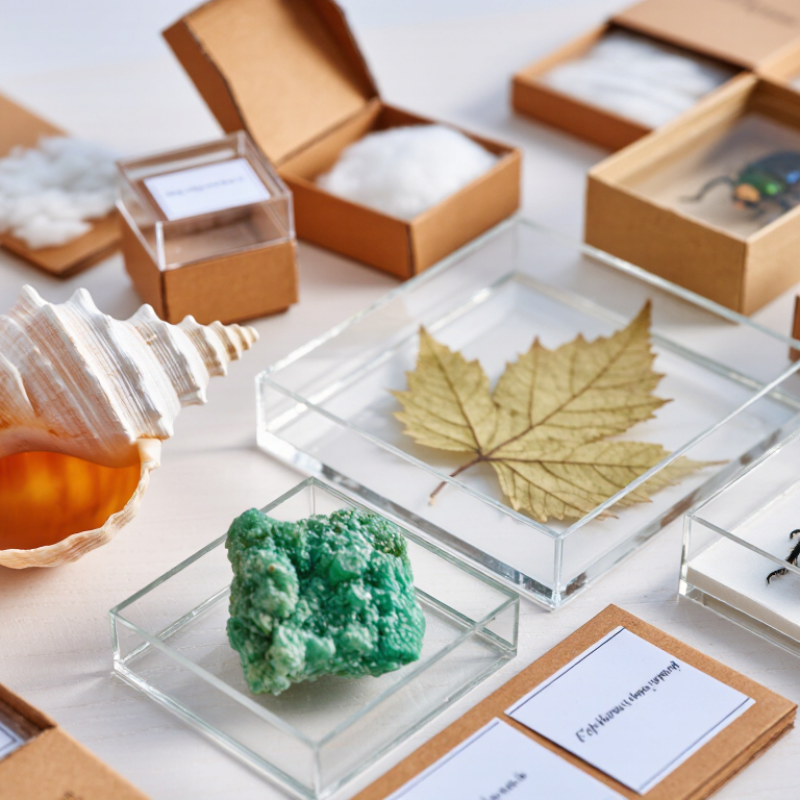
What Natural Specimen Suppliers Provide
Natural specimen suppliers provide more than attractive objects. Reliable suppliers offer identification, provenance, condition grading, and secure packaging. A mineral should arrive with its locality, composition, dimensions, and treatment status clearly recorded. For fossils and botanical specimens, lawful acquisition records matter even more. Buyers should request collection dates, permits where applicable, and export documentation before payment.
Technical accuracy separates a specialist supplier from a casual reseller. The U.S. Geological Survey’s Mineral Commodity Summaries 2024 covers more than 90 mineral commodities, showing how varied mineral identification can be. Professional suppliers often use hardness tests, density measurements, microscopy, and laboratory analysis. Their product images should show edges, fractures, matrix, and scale. One polished photograph is not enough. I have seen attractive labels hide uncertain origins.
International buyers also need predictable logistics. Suppliers may provide customs descriptions, commercial invoices, protective foam, humidity control, and replacement policies for transit damage. UN Comtrade classifies many collection specimens under HS 9705, including mineralogical and botanical materials, but classification details can vary by country. Buyers should confirm codes with customs professionals. CITES guidance and national wildlife rules also affect certain biological materials, so responsible suppliers exclude restricted specimens or provide valid documentation. The market still has weak points. Some grading remains subjective, and online measurements can be misleading. Ask for current photographs, independent test results, and written specifications before accepting a quotation.
How to Evaluate Supplier Quality and Authenticity
A supplier’s website is only a starting point. I examine clear photos, specimen dimensions, locality data, and recent batch records. Surface detail matters. Natural growth lines, matrix attachment, and small irregularities often reveal more than a perfect finish.
Authenticity needs evidence, not confident wording. I request collection permits, export documents, and a traceable chain of custody where required. I also check whether the material comes from legal, non-protected sources. A certificate alone is not proof. Independent laboratory testing can confirm composition, density, or structure when the purchase justifies its cost. For fragile items, I avoid destructive testing and ask for written inspection approval.
I once trusted a close photograph too quickly. The delivered specimen had a repaired edge that the image concealed. Now I request photographs under neutral light, including scale, reverse sides, and damage points. Magnification can expose resin, paint, artificial fractures, or repeated patterns. Supplier reliability also appears in practical details: consistent lot numbers, protective packing, insurance options, and a fair return process. Communication should be specific. Vague answers about origin deserve caution. No system is perfect. Even experienced buyers can miss treatment or mixed material, so I document every check before payment.
Key Regions and Types of Global Specimen Suppliers
Global specimen suppliers are concentrated in regions with strong biodiversity, geology, or research networks. Southeast Asia is known for cultivated botanical samples, pressed leaves, seeds, and educational plant materials. South America supplies responsibly collected minerals, fossils, and legally documented plant specimens. African suppliers often provide geological samples, traditional plant references, and classroom materials under local permits.
Supplier types vary by buyer needs. University-linked collections usually offer precise labels, collection dates, and taxonomic information. Certified botanical farms can provide dried plant parts with consistent quality and harvest records. Geological dealers focus on minerals, rocks, and fossils, while conservation-oriented organizations may supply replicas or non-sensitive educational specimens. Museum surplus programs can be useful, but availability is irregular.
Ask for origin records. Check export permissions. Inspect the packaging closely. I have found that clear labeling often matters more than appearance during customs review. Moisture damage can ruin a carefully prepared sample within days. Some suppliers describe materials as “natural” without explaining collection methods. That wording deserves questions. A beautiful specimen is not automatically a responsible one. Buyers should compare permits, chain-of-custody documents, storage conditions, and replacement policies before placing large orders. Even experienced purchasers can overlook regional restrictions or inaccurate species names, so independent verification remains worthwhile.
Ordering, Exporting, and Handling Natural Specimens
Ordering natural specimens for international delivery requires more than choosing a supplier. Ask for scientific names, collection locations, source records, dimensions, and high-resolution photographs. CITES trade data is organized by species, specimen type, quantity, source, and trade purpose. This makes traceable documentation essential. Some suppliers provide beautiful images but weak records. That is a warning sign.
Export planning should match the specimen to its transport conditions. IATA reported an 11.3% increase in global air-cargo demand during 2024, yet faster shipping does not prevent poor packing. A fragile shell needs internal padding, a dry specimen needs moisture control, and geological samples require sealed bags to prevent dust transfer. Use a commercial invoice, packing list, accurate tariff description, and any required permits. Never assume the buyer’s customs broker will correct vague paperwork.
Handling begins before dispatch. Photograph each item beside a ruler, record its weight, and inspect the package before sealing it. Temperature-sensitive materials may need insulated packaging and data loggers. The UNEP-WCMC World Conservation Monitoring Centre highlights the importance of reliable biodiversity records for conservation decisions. That principle also applies to commercial orders. My own practical preference is simple: label every package twice. Still, labels can detach, and moisture absorbers can become saturated. Build in a manual inspection step. Mistakes happen. A careful supplier documents them, corrects them, and improves the next shipment.
How Global Buyers Can Choose the Right Supplier
Top Natural Specimen Suppliers for Global Buyers
Choosing the right natural specimen supplier requires more than attractive photographs. Ask for origin records, collection dates, material descriptions, and export documents. For biological specimens, verify applicable CITES requirements and local conservation rules before payment. The IUCN Red List recorded more than 46,000 threatened species in 2024, making careless sourcing a serious concern.
Look for suppliers with repeatable inspection procedures. Request close-up images, measurements, moisture details, and packaging plans. A professional supplier should explain how fragile pieces are protected during transit. The World Bank’s Logistics Performance Index 2023 evaluates customs, infrastructure, tracking, and timeliness. Use these categories when comparing shipping partners. Small delays matter.
Check trade terms carefully. ICC Incoterms 2020 clarifies responsibility for transport, insurance, and customs costs. Ask who handles damage claims. A trial order can reveal packing quality, response speed, and document accuracy. I would not rely on testimonials alone. They can be selective. Keep a written checklist, record discrepancies, and compare the delivered specimen with the approved sample. Good sourcing is sometimes less convenient. That is useful information.
Top Natural Specimen Suppliers for Global Buyers - How Global Buyers Can Choose the Right Supplier
Comparison of common supplier profiles, purchasing conditions, compliance requirements, and quality indicators. Lead times and minimum order quantities are typical industry ranges and should be confirmed for each shipment.
| Supplier Profile | Typical Specimens | Typical MOQ | Typical Preparation Lead Time | Key Documentation | Quality-Control Indicators | Legal & Sustainability Checks | Best Fit for Buyers |
|---|---|---|---|---|---|---|---|
| Mineral & Rock Supplier | Crystals, polished minerals, geodes, geological teaching samples, rock sections | 10–100 pieces per item or mixed cartons | 7–30 days for sorting, grading, polishing, and packing | Commercial invoice, packing list, certificate of origin when required, customs tariff classification | Specified size and weight range, crack and repair disclosure, consistent grading, protective packaging | Proof of lawful extraction or purchase; avoid protected geological sites and undocumented archaeological material | Retail, education, interior display, museums, and gift-product wholesalers |
| Fossil & Paleontology Supplier | Fossil shells, ammonites, plant fossils, trilobites, prepared matrix specimens | 5–50 pieces, usually subject to specimen availability | 14–45 days for preparation, authentication review, and export packing | Invoice, packing list, origin statement, lawful-collection or ownership records where applicable | Restoration disclosure, dimensions, geological identification, high-resolution photographs, specimen numbering | Country-specific export restrictions; archaeological and cultural-heritage rules must be checked before purchase | Museums, educational distributors, collectors, and specialist retailers |
| Dried Botanical Specimen Supplier | Pressed leaves, seed pods, dried flowers, wood samples, herbarium-style specimens | 50–500 pieces or 10–100 boxed sets | 14–60 days depending on harvest season and drying requirements | Commercial invoice, packing list, botanical names, phytosanitary documents when required by the destination country | Moisture control, pest inspection, botanical identification, color and size consistency, sealed packaging | Verify invasive-species restrictions, protected-plant rules, collection permission, and treatment declarations | Craft, education, décor, packaging design, and botanical research projects |
| Insect & Arthropod Supplier | Mounted butterflies, beetles, moths, educational insect collections, preserved arthropods | 20–200 mounted specimens or custom assortments | 10–35 days for mounting, inspection, and protective packing | Invoice, packing list, scientific names, origin records, CITES permits for listed species when applicable | Intact wings and appendages, pest-free packing, species identification, humidity protection, photo approval | Confirm CITES status, national wildlife rules, lawful collection, and whether captive breeding or farm records are needed | Educational displays, museums, décor retailers, and scientific collections |
| Shell & Marine Specimen Supplier | Empty shells, cleaned marine specimens, echinoderms, non-protected decorative items | 50–500 pieces or mixed cartons | 7–30 days for cleaning, drying, sorting, and export preparation | Invoice, packing list, scientific names, origin details, wildlife permits where applicable | Odor-free and pest-free condition, no fresh biological tissue, size grading, breakage inspection | Check national fisheries and wildlife rules; corals, giant clams, some shells, and marine species may be protected or CITES-listed | Craft suppliers, educational users, décor manufacturers, and aquarium-related retailers |
| Mixed Natural-Collection Wholesaler | Assorted minerals, fossils, botanical items, shells, and educational specimen sets | 1–10 cartons or 100–1,000 mixed units | 7–21 days for stock selection and consolidated packing | Commercial invoice, packing list, itemized product description, origin details, permits for regulated items | Pre-shipment photographs, SKU-level counting, mixed-carton inspection, standardized grading and packaging | Request traceability by product category and exclude any item lacking legal-origin evidence | Online retailers, museum shops, classroom suppliers, and buyers testing multiple product categories |
