
Top China L-Carnitine Powder Supplier for Bulk Buyers?
Choosing the right China L-Carnitine Powder supplier can shape product quality, margins, and customer trust. Bulk buyers need more than a competitive quotation. They need clear specifications, stable supply, and evidence that every batch meets agreed standards.
A reliable supplier should provide a detailed certificate of analysis, including purity, moisture, heavy metals, microbiological limits, and identification results. Independent laboratory testing can strengthen confidence. Batch numbers, production dates, and traceability records also matter. Ask how the supplier manages raw material sourcing, blending, packaging, and storage. A clean facility is useful, but documented procedures are more convincing. Look for relevant quality systems, such as GMP-based controls or ISO-certified processes, where applicable.
Small details reveal practical experience. Does the powder arrive in sealed bags with readable labels? Can the supplier explain its typical lead time during busy seasons? Are samples taken from the same production line used for commercial orders? These questions help separate a trading company from a technically capable manufacturer. Still, no supplier review is perfect. Documents may be current but incomplete, and a successful sample does not guarantee every future shipment. That is why buyers should combine audits, sample testing, contract terms, and regular batch verification. Price matters. It should not lead the decision. This guide examines supplier capability, quality evidence, communication, customization, and export readiness, helping bulk buyers make a more informed choice when sourcing L-Carnitine Powder from China.
What Is L-Carnitine Powder and How Is It Used?
L-Carnitine powder is a crystalline, water-soluble compound related to amino acids. The body uses it to help transport long-chain fatty acids into mitochondria, where energy production occurs. It is naturally present in certain foods, including meat and dairy products. Powdered L-carnitine is commonly used in dietary supplements, sports nutrition formulas, and functional food applications. Some products use it in capsules, drink mixes, or measured sachets.
Its practical value depends on the intended formula and serving size. It should not be presented as a guaranteed weight-loss solution. Evidence and outcomes can vary between individuals. For bulk buyers, product identity, assay, moisture, particle size, microbiological status, and heavy-metal testing deserve close attention. A reliable supplier should provide current specifications, batch records, and a certificate of analysis from qualified testing. Packaging also matters. Moisture-resistant bags can help protect the powder during storage and transport. In my view, buyers sometimes focus too heavily on price. That can create avoidable quality questions later.
Tips: Request a representative sample before ordering. Compare the sample with the final specification. Check whether the powder disperses evenly in your planned formula. Confirm storage conditions and shelf life. Ask how testing is performed, not only whether testing exists. Small details matter.
How to Evaluate a China-Based L-Carnitine Powder Supplier
Bulk buyers should evaluate evidence, not attractive promises. Ask for a recent certificate of analysis from the exact production batch. Check assay, moisture, heavy metals, microbial limits, and residual solvents. The testing laboratory should be identifiable and independently verifiable. A polished PDF is not proof. Request batch numbers, production dates, and matching warehouse records. Traceability matters when several containers arrive months apart.
Tips: Order a small sample first. Compare its color, odor, solubility, and test results with the specification. Ask whether the supplier follows recognized quality systems, such as GMP or ISO standards. Verify certificates through the issuing body when possible. Review packaging details, including inner liners, tamper seals, lot labels, and recommended storage conditions. Keep written records of every revision.
Communication also reveals operational reliability. A capable supplier should explain lead times, minimum order quantities, loading methods, and temperature or humidity controls. Ask how rejected batches are handled. Ask who approves specification changes. Vague answers deserve caution. Payment terms and delivery documents should be clear before production begins. Do not choose only by the lowest price; unusually cheap material may reflect weaker testing or inconsistent sourcing. Even careful buyers can miss small details, especially when translations are imperfect. Have a qualified reviewer check technical documents before signing.
How to Evaluate a China-Based L-Carnitine Powder Supplier
The chart presents a practical weighted evaluation model for bulk buyers. Quality and compliance receive the highest weighting because L-carnitine powder should be verified through batch-specific COAs, identity testing, assay results, contaminant controls, traceability, and third-party certifications. The percentages are recommended procurement weights rather than ratings for any individual company or brand.
What Quality Standards Matter for Bulk L-Carnitine Buyers?
For bulk L-carnitine buyers, quality starts with identity, not price. The powder should match its declared chemical form, assay, and physical appearance. A reliable supplier provides batch-specific certificates of analysis, not generic files. Testing should cover assay, water content, heavy metals, residual solvents, and microbiological limits.
FDA’s 21 CFR Part 111 requires dietary supplement manufacturers to verify identity, purity, strength, composition, and contamination controls. USP General Chapters <61> and <62> provide recognized methods for microbial quality testing. Analytical methods should also show accuracy, precision, specificity, and stability, consistent with ICH Q2(R2), updated in 2023. These details matter when powder arrives in sealed drums, with small differences in moisture or particle size affecting blending.
Tips: Ask for an independent ISO/IEC 17025 laboratory report. Check the test date, batch number, method, and detection limits. Confirm whether the material is L-carnitine base or a specified salt. Do not accept “food grade” as a complete quality claim.
A 2024 USP dietary supplements reference emphasizes traceability and validated testing across the supply chain. Still, documentation can look better than reality. Request a retained sample and compare it with the next shipment. A supplier should explain unusual results clearly, even when the answer is inconvenient.
| Quality Dimension | What Bulk Buyers Should Check | Practical Acceptance Benchmark | Recommended Evidence | Priority |
|---|---|---|---|---|
| Product Identity | Confirm that the material is L-carnitine rather than L-carnitine L-tartrate, acetyl-L-carnitine, or another derivative. | CAS 541-15-1; molecular formula C7H15NO3; molecular weight approximately 161.20 g/mol for L-carnitine base. | Identity test by FTIR, HPLC, or another validated method, supported by the agreed product specification. | Critical |
| Assay and Potency | Review the quantitative content of L-carnitine and confirm whether the result is reported on an as-is or dry basis. | Use the contracted specification; a commonly used commercial target is approximately 97.0%–103.0% for L-carnitine base, subject to the test method and product form. | Batch-specific certificate of analysis with method reference, result, unit, basis, and laboratory approval. | Critical |
| Moisture and Water | Excess moisture can affect flowability, stability, packaging performance, and the calculated active content. | Set a moisture limit according to the validated product specification; Karl Fischer testing is preferred when water content must be measured accurately. | Karl Fischer or validated loss-on-drying result, including the test date and sample identification. | High |
| Impurity Profile | Check related substances, residual starting materials, degradation products, and inorganic residues. | Limits should be established through a risk assessment and agreed specification rather than relying only on a general appearance check. | Validated HPLC or equivalent impurity report with individual and total impurity results. | Critical |
| Heavy Metals and Elemental Impurities | Evaluate lead, arsenic, cadmium, mercury, and other elements relevant to the raw-material process and intended market. | Apply the limits required by the destination market and product category; use risk-based elemental-impurity controls instead of an unspecified “heavy metals pass” statement. | ICP-MS or ICP-OES report, laboratory accreditation details, and an elemental-impurity risk assessment. | Critical |
| Microbiological Quality | Confirm total aerobic microbial count, total yeast and mold count, and absence or limits for specified pathogens. | Limits should match the final application, such as food, dietary supplement, or pharmaceutical use, and the destination-market requirements. | Microbiology certificate of analysis with sampling plan, methods, results, and specification limits. | Critical |
| Residual Solvents | Determine whether solvents are used in the manufacturing or purification process and whether any may remain in the finished powder. | Control residual solvents according to the applicable ICH Q3C or market-specific requirements when relevant to the process. | Residual-solvent analysis by gas chromatography or a documented justification for not testing. | High |
| Physical Appearance | Inspect color, odor, visible contamination, agglomeration, and powder uniformity. | Uniform white to off-white powder is commonly specified for L-carnitine products; the exact description must be agreed in advance. | Approved visual standard, retained sample comparison, and batch inspection record. | High |
| Particle Size and Flow | Particle-size distribution affects blending, filling, dust generation, dissolution, and automated handling. | Define a sieve or laser-diffraction range based on the buyer's process rather than using a generic particle-size claim. | Particle-size distribution report, bulk density, tapped density, and flowability data where applicable. | High |
| Solubility and Performance | Verify that the powder dissolves consistently in the intended formulation and does not create unacceptable haze or sediment. | Use a buyer-approved test concentration, solvent, temperature, mixing time, and visual or instrumental endpoint. | Application-specific performance test and a signed technical specification. | High |
| Traceability | Every shipment should be traceable to raw materials, production records, testing, packaging, and release decisions. | Unique lot number, manufacturing date, retest or expiry date, production record, and retained sample for each batch. | Batch record summary, traceability statement, and documented change-control procedure. | Critical |
| Quality Management System | Assess whether the facility maintains controlled procedures for deviations, complaints, recalls, corrective actions, and changes. | Documented GMP-based quality procedures appropriate to the intended use and destination market. | Current audit report, quality manual summary, deviation and CAPA process, and relevant third-party certification where applicable. | Critical |
| Packaging and Storage | Protect the powder from moisture, contamination, heat, light, and damage during bulk transport. | Food- or pharmaceutical-contact packaging as applicable, intact seals, clear lot labeling, and storage conditions supported by stability data. | Packaging specification, container-closure information, transport requirements, and stability or retest documentation. | High |
| Stability and Shelf Life | Confirm that assay, moisture, appearance, and microbiological quality remain within specification throughout the stated shelf life. | Shelf life should be supported by real-time or appropriately designed stability data under defined storage conditions. | Stability protocol, time-point results, retest rationale, and recommended storage statement. | High |
| Regulatory and Market Fit | Check whether the product, labeling, documentation, and manufacturing controls meet the rules of the importing country and final application. | Specification and dossier should be aligned with the product category, such as food ingredient, dietary supplement, or pharmaceutical raw material. | Regulatory statement, allergen and GMO declarations where relevant, product specification, SDS, and export documentation. | Critical |
Buyer note: Numerical limits should be finalized in a signed product specification because requirements vary by chemical form, intended use, analytical method, and destination market.
How Bulk Orders, Packaging, and Shipping Are Managed
Top China L-Carnitine Powder Supplier for Bulk Buyers?
Bulk purchasing starts with disciplined order planning, not a low unit price. A reliable China supplier should confirm specification, assay, mesh size, allergen status, and target quantity before production. Buyers should request a current certificate of analysis, batch number, manufacturing date, and retention-sample policy.
Grand View Research valued the global dietary supplements market at approximately USD 177.5 billion in 2023, showing why traceable ingredient supply matters at scale. Demand can change quickly. Forecasts should include safety stock.
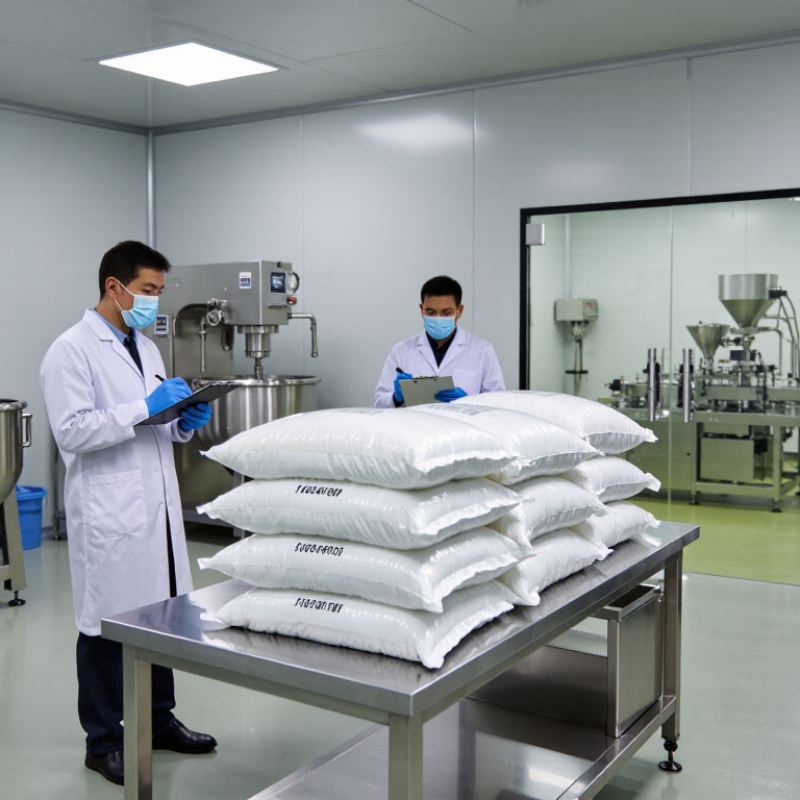
Packaging must protect powder during handling and long-distance transport. Common bulk formats include 20–25 kg bags with double polyethylene liners, cartons, or fiber drums. Moisture control is essential, especially in humid ports.
Outer labels should show lot number, net weight, storage conditions, and country of origin. The supplier should photograph palletized goods before dispatch. Small details prevent large disputes.
Shipping plans should define Incoterms, documents, inspection timing, and responsibility for customs clearance. A forwarder can compare sea freight for planned volumes with air freight for urgent replenishment.
The International Air Transport Association reported that global air cargo demand grew 11.3% year over year in 2024, but capacity and rates still vary by route. One weakness remains: delivery estimates are never perfectly fixed. Weather, port congestion, and document corrections can interrupt schedules. Buyers should approve a pre-shipment sample, verify seal integrity, and keep written records for every batch.
What Should Buyers Check Before Choosing a Supplier?
Choosing a Top China L-Carnitine Powder Supplier for Bulk Buyers
Bulk buyers should verify the supplier before discussing price. Request a current specification sheet, certificate of analysis, and batch traceability records. Check L-carnitine purity, moisture, microbiological limits, heavy metals, and residual solvents. The testing method matters. A certificate without laboratory details is weak evidence.
Ask whether production follows recognized quality systems, such as GMP or ISO-based procedures. Confirm that the stated facility matches the legal manufacturer and export documents. Review packaging carefully. Sealed inner liners, lot numbers, production dates, and storage instructions protect product quality during transport. Request a recent sample from the same production line. Samples can mislead.
A reliable supplier should answer technical questions clearly and provide consistent documents. Compare several batches, not just one attractive report. Check lead times, minimum order quantities, loading conditions, and support for customs paperwork. Do not rely on unusually low pricing. It may reflect different purity, weaker testing, or unstable raw material control. Yet certificates are not everything. Communication delays and vague answers often reveal operational problems. One overlooked issue is change control. Ask how the supplier informs buyers about formula, facility, or process changes. Keep written records, even when the sales relationship feels trustworthy. Mistakes happen, and buyers should leave room for independent verification.
