
China Best Bovine Collagen Powder Supplier?
China’s growing nutraceutical sector has made it a serious destination for Collagen Powder Bovine sourcing. Yet “best supplier” should never mean the lowest quoted price. It should mean consistent quality, transparent documentation, and dependable communication.
Dr. Kellyann Petrucci, a physician and collagen educator, describes collagen as “the glue that holds your body together.” This simple comparison explains why buyers examine purity carefully. Bovine collagen usually comes from cattle hides or bones. Responsible suppliers should disclose the source, processing method, peptide size, and production location. Clear details matter.
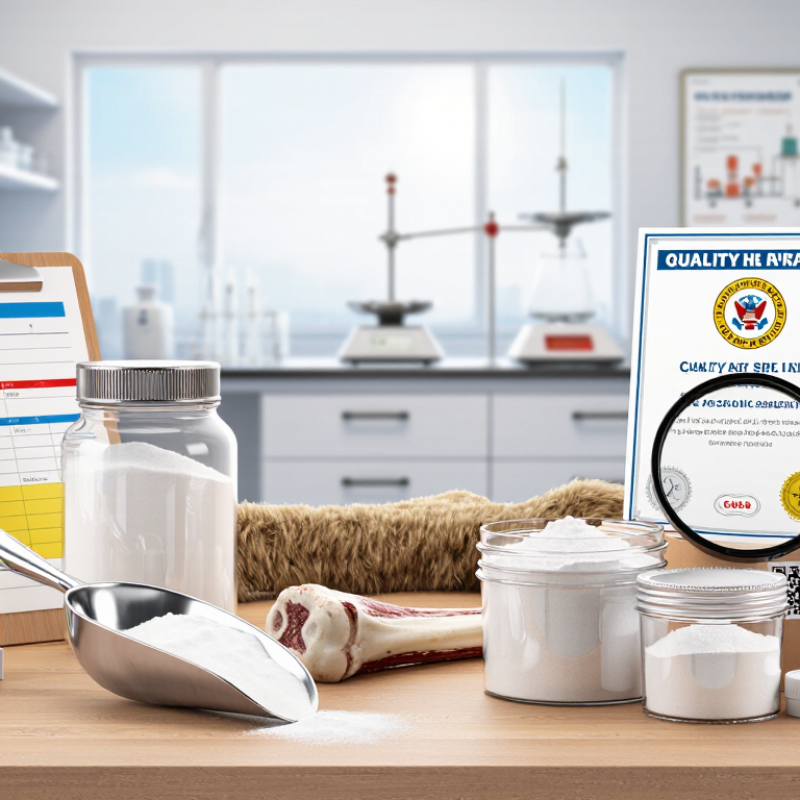
A reliable factory should provide batch-specific certificates of analysis. These documents should cover protein content, moisture, microbiological limits, and heavy-metal testing. Third-party laboratory reports add useful confidence. So does traceability.
Look for GMP-style production controls, export experience, and responsive technical support. Ask whether the powder dissolves smoothly in cold water. Check its odor, color, and taste during a small trial. Small details reveal large problems.
Still, supplier claims deserve careful review. A polished website proves little. Even a clean sample cannot guarantee every future batch. This is where many purchasing decisions become too optimistic. Buyers should compare several samples and request retained-batch procedures.
Our guide examines how to identify China’s best Collagen Powder Bovine supplier through practical, evidence-based checks. It considers raw-material control, testing depth, customization, packaging, lead times, and after-sales accountability. The ideal partner is not simply a manufacturer. It is a transparent, consistent, and technically capable supplier that earns trust shipment by shipment.
What Is Bovine Collagen Powder? Type I Protein and 18 Amino Acids
Bovine collagen powder is a protein ingredient made from processed cattle hides or bones. After enzymatic hydrolysis, large collagen molecules become smaller peptides. These peptides usually dissolve more easily in water. They are commonly used in nutrition powders, beverages, and functional food formulas. Type I collagen dominates bovine collagen. It is naturally associated with skin, bones, tendons, and connective tissue.
A typical bovine collagen profile contains 18 amino acids, including glycine, proline, hydroxyproline, alanine, and arginine. Hydroxyproline is especially useful for identifying collagen structure. However, collagen is not a complete protein because it contains little or no tryptophan. That distinction matters. Its amino acid pattern differs from whey, soy, or egg protein. Practical testing should confirm protein content, moisture, peptide molecular weight, microbiological limits, and heavy metal levels. A reliable China-based supplier should provide batch-specific certificates, traceable raw materials, and clear processing records.
In product development, solubility and taste often matter as much as laboratory values. A powder may show high protein content but still produce a strong odor in cold water. It dissolves quickly. Yet, “instant” performance can change with pH, minerals, or sweeteners. I would also question unusually broad health claims, since collagen research remains condition-specific and product-dependent. Independent testing is valuable, although it does not remove every uncertainty. Storage deserves attention too: moisture can cause clumping, even inside a sealed bag. A careful buyer should compare several batches rather than trust one impressive sample.
| Category | Data Dimension | Typical Fact or Value | Technical Notes |
|---|---|---|---|
| Identity | Ingredient | Bovine collagen powder | A protein ingredient obtained from bovine connective tissues and processed into a dry powder. |
| Protein Type | Predominant collagen type | Type I collagen | Type I is the principal collagen type in skin, tendon, ligament, bone and other connective tissues. |
| Protein Structure | Triple-helix composition | Glycine occurs approximately every third amino-acid position | The repeating glycine-rich sequence helps form the characteristic collagen triple-helix structure. |
| Processing | Hydrolyzed collagen | Shorter collagen peptides | Enzymatic hydrolysis breaks collagen into smaller peptides that are generally easier to disperse and digest than intact collagen. |
| Amino-Acid Count | Commonly reported profile | 18 amino acids | The commonly reported collagen profile includes standard amino acids plus collagen-specific hydroxylated amino acids. |
| Amino Acid | Glycine | Present; highly abundant | A defining amino acid of collagen and a key component of its repeating structural sequence. |
| Amino Acid | Proline | Present; abundant | Contributes to the conformational stability of collagen chains. |
| Amino Acid | Hydroxyproline | Present; characteristic of collagen | A post-translationally modified amino acid used as an analytical marker for collagen. |
| Amino Acid | Alanine | Present | One of the amino acids commonly identified in collagen hydrolysate profiles. |
| Amino Acid | Glutamic acid | Present | A standard acidic amino acid found in collagen protein. |
| Amino Acid | Arginine | Present | A basic amino acid commonly reported in bovine collagen profiles. |
| Amino Acid | Aspartic acid | Present | A standard acidic amino acid found in collagen. |
| Amino Acid | Lysine | Present | Important in collagen cross-linking after enzymatic modification in connective tissue. |
| Amino Acid | Serine | Present | Commonly detected in collagen amino-acid analysis. |
| Amino Acid | Leucine | Present | An essential amino acid included in the typical bovine collagen profile. |
| Amino Acid | Valine | Present | An essential branched-chain amino acid found in collagen. |
| Amino Acid | Threonine | Present | An essential amino acid commonly reported in collagen hydrolysate. |
| Amino Acid | Phenylalanine | Present | An essential aromatic amino acid found in small amounts in collagen. |
| Amino Acid | Isoleucine | Present | An essential branched-chain amino acid included in typical collagen profiles. |
| Amino Acid | Methionine | Present; generally limited | An essential sulfur-containing amino acid that is usually present at a relatively low level in collagen. |
| Amino Acid | Histidine | Present | An amino acid commonly identified in bovine collagen analysis. |
| Amino Acid | Tyrosine | Present; generally limited | An aromatic amino acid that is typically found in relatively small quantities. |
| Amino Acid | Hydroxylysine | Present; characteristic collagen modification | A hydroxylated derivative of lysine that contributes to collagen cross-link formation. |
| Amino Acid Profile | Notable limitation | Tryptophan is generally absent | Collagen is not considered a complete dietary protein because it lacks tryptophan and has an imbalanced essential-amino-acid profile. |
| Amino Acid Profile | Cysteine content | Absent or very low | Cysteine is not a major structural amino acid in Type I collagen. |
| Physical Form | Appearance | White to light cream powder | Color can vary with raw material, purification, drying method and processing conditions. |
| Solubility | Water dispersibility | Generally dispersible in water when hydrolyzed | Solubility depends on peptide size, concentration, temperature, pH and processing conditions. |
| Taste and Odor | Sensory profile | Typically neutral to mildly characteristic | Sensory properties vary according to raw-material treatment, deodorization and hydrolysis conditions. |
| Quality Testing | Common analytical checks | Protein content, moisture, ash, microbiology and heavy metals | Testing requirements depend on the intended food, supplement, cosmetic or industrial application and applicable regulations. |
| Specification | Batch-to-batch values | Must be confirmed by a product specification or certificate of analysis | Amino-acid quantities, peptide-size distribution, moisture and microbiological results are not fixed and should not be assumed from the ingredient name alone. |