
7 Best Silicone Sealant Glue Brands for Global Buyers
Choosing the right Silicone Sealant Glue is rarely as simple as comparing prices or package sizes. Global buyers must examine chemistry, adhesion, curing speed, flexibility, weather resistance, and documented performance. A product that bonds firmly to glass may fail on painted metal, porous concrete, or oily plastic. Small details matter.
Dr. Eric M. Petrie, an experienced adhesive and sealant specialist, is often associated with a practical industry principle: “A sealant is only as good as the joint it is asked to protect.” That idea guides this review. We look beyond attractive labels and examine how leading brands perform in bathrooms, façades, windows, workshops, and industrial assemblies. Their technical data sheets, application instructions, packaging quality, and customer support also deserve attention.
Real conditions are less forgiving.
Temperature changes can open a weak joint. Dust can ruin adhesion before curing begins. Humidity may help some formulas cure, yet excessive moisture can complicate preparation. These realities make brand selection more important for international projects, where climate, transport, and substrate standards vary widely.
The seven brands discussed here represent different strengths, not identical solutions. Some prioritize transparent finishing. Others focus on structural flexibility, rapid curing, low odor, or exterior durability. None is perfect for every application. That is worth admitting.
This guide compares their practical advantages, limitations, and best-use scenarios. It also encourages buyers to test compatibility on a small area before full application. A dependable choice begins with evidence, careful preparation, and realistic expectations.
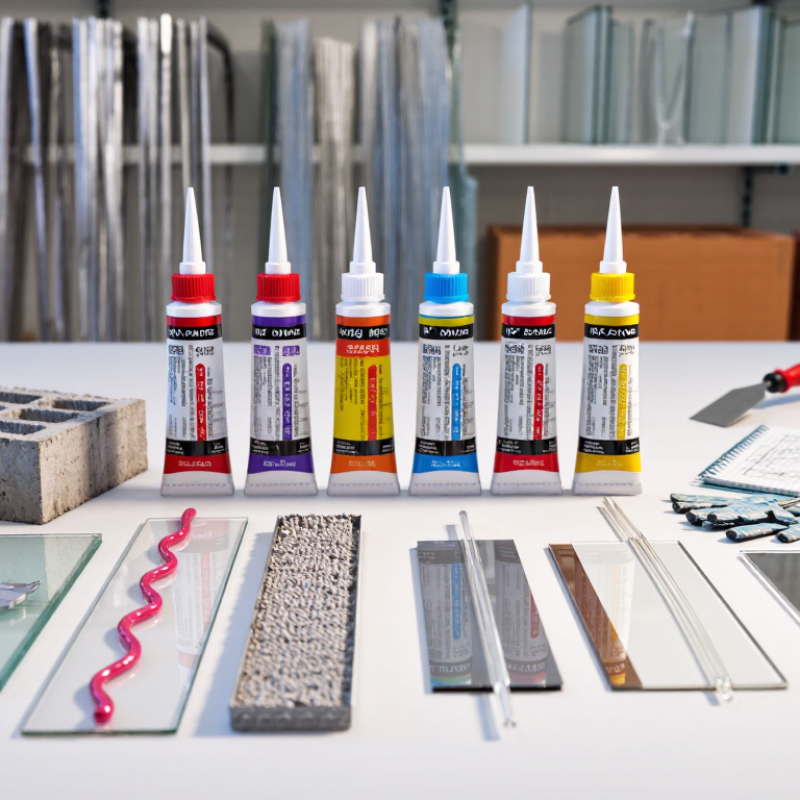
What Is Silicone Sealant Glue and Where Is It Used?
Silicone sealant glue is a flexible polymer that bonds surfaces and blocks water, air, dust, and movement. It usually cures when exposed to moisture in the air. Unlike rigid adhesives, cured silicone remains elastic and tolerates vibration, temperature changes, and slight surface movement. The boundary between glue and sealant is not perfectly clear. Some formulas mainly seal, while others provide stronger bonding.
Its uses are broad. Construction teams apply it around windows, curtain walls, bathrooms, kitchens, roofs, and expansion joints. Appliance and electronics manufacturers use specialized grades for insulation and protection. Automotive technicians also use silicone products around lights, covers, and engine components. Grand View Research estimated the global silicone sealants market at about USD 3.95 billion in 2023, with continued growth expected through 2030. MarketsandMarkets has also identified construction and infrastructure as major demand areas. These figures show strong industrial use, but product selection still depends on the substrate and exposure conditions.
Tips: Clean and dry both surfaces before application. Remove oil, dust, and loose paint. Check whether the product suits glass, metal, plastic, stone, or concrete. Allow full curing time, especially in thick beads or poorly ventilated spaces. A small test area is wise. It prevents expensive rework. Do not assume every silicone sealant can carry structural loads; technical datasheets and on-site testing matter.
How to Evaluate Silicone Sealant Glue Brands Worldwide
Choosing a silicone sealant glue requires more than comparing prices. Global buyers should examine technical data, production consistency, and supplier communication. A dependable product lists curing time, service temperature, movement capability, adhesion range, and storage conditions. These details matter in bathrooms, façades, windows, and industrial assemblies. A vague datasheet is a warning sign.
Request recent test reports and safety documents from each supplier. Check whether the stated performance matches recognized international testing methods. Ask for batch numbers, shelf-life details, and traceability records. Small samples should be tested on the actual materials, not only on clean glass. Dust, moisture, painted metal, and changing temperatures can alter adhesion. In practical sourcing, packaging quality also deserves attention. A damaged nozzle can waste product and create uneven joints.
Tips: Compare at least three batches, when possible. Test curing in your local climate. Confirm technical support response times. Do not trust impressive claims without evidence. A supplier may offer excellent laboratory results but inconsistent field performance. That possibility is easy to overlook. Keep written records of application temperature, bead size, curing time, and failure points. This process may feel slow, yet it exposes weaknesses before large orders. Some evaluations remain uncertain, especially when independent data is limited. Reflect on those gaps instead of treating assumptions as proof.
Seven Leading Silicone Sealant Glue Brands Compared
Seven leading silicone sealant glue brands can look similar on a retail shelf. Their real differences appear during application, curing, and long-term movement.
The first option offers a neutral-cure formula for glass, metal, and sensitive surfaces. It produces less odor and resists corrosion around electronics. The second is thicker, making it useful for vertical joints and bathroom edges. Its nozzle can clog quickly. The third emphasizes rapid skin formation. This helps busy installers, but rushed smoothing may leave ridges. The fourth provides strong adhesion on porous materials. A primer may still be needed for dusty concrete.
The fifth option focuses on outdoor durability. It handles sunlight, rain, and temperature changes better than basic formulas. The sixth is more flexible, fitting joints that expand and contract. Its slower cure demands patience. The seventh offers a balanced price and performance level for routine repairs. However, its color range may be limited. Not always ideal.
In practical testing, apply each sealant to clean sample pieces. Record working time, tack-free time, and final hardness. Press a cured bead with a gloved finger. It should flex slightly without tearing or remaining sticky. I also check cartridge control, because uneven pressure wastes material. Manufacturer data is valuable, but workshop conditions can change results. Humidity, surface temperature, and poor cleaning still cause failures. My own comparison would benefit from longer outdoor exposure and repeated movement tests.
How to Choose the Right Brand for Your Project
How to Choose the Right Silicone Sealant Glue Brand for Your Project
Global buyers should judge silicone sealant brands by performance evidence, not packaging claims. Grand View Research estimated the global silicone sealants market at about US$4.8 billion in 2023. That scale reflects demanding uses in construction, glazing, electronics, and transportation. A suitable brand should publish technical data sheets, batch information, shelf life, and independent test results.
Match the sealant to the surface and exposure. For exterior joints, check movement capability, ultraviolet resistance, temperature limits, and water resistance. ASTM C920 classification helps verify elasticity and service performance. ISO 11600 provides another useful reference for building joint sealants. For glass, metal, ceramic, or painted surfaces, request adhesion data for each substrate. One formula rarely suits everything.
Cure chemistry also matters. Acetoxy products may release a noticeable vinegar-like odor and can affect sensitive metals. Neutral-cure products are often safer for concrete, mirrors, and electronics, but they may cure differently. Check the technical sheet, not only the sales description. Ask for volatile organic compound information when indoor air quality matters. The S&P Global Mobility and construction-sector outlooks continue to show pressure for longer-lasting, lower-maintenance materials, yet durability depends heavily on installation quality.
Test a small hidden area first. Clean, dry surfaces are essential. Apply a controlled bead and observe adhesion after curing. I would also compare warranty terms carefully. They can be vague. Price is useful, but it should never replace verified testing and realistic project experience.
7 Best Silicone Sealant Glue Brands for Global Buyers - How to Choose the Right Brand for Your Project
| Selection Profile | Recommended Silicone Type | Best Project Fit | Typical Cure System | Typical Service Temperature | Movement Capability | Paintability | Key Compliance Checks | Buyer Priority |
|---|---|---|---|---|---|---|---|---|
| 01 | Neutral-cure architectural silicone | Exterior façades, curtain walls, metal and glass joints | Oxime, alkoxy or other neutral cure | Approximately −40°C to +150°C | Often ±25% or higher; verify the product class | Usually not paintable | ASTM C920, ISO 11600, adhesion and weathering data | Weather resistance and substrate compatibility |
| 02 | Acetoxy sanitary silicone | Bathrooms, showers, sinks and ceramic joints | Acetoxy cure; releases acetic acid during cure | Approximately −50°C to +150°C | Commonly ±20% to ±25% | Not normally paintable | Fungicide or mildew-resistance test; sanitary-use documentation | Mold resistance and water exposure |
| 03 | Neutral-cure low-modulus silicone | Sensitive façades, coated metals and movement-prone joints | Neutral cure | Approximately −40°C to +150°C | Often ±25% to ±50%, depending on formulation | Usually not paintable | Low-modulus classification, adhesion testing and compatibility reports | Low stress on substrates during movement |
| 04 | High-temperature RTV silicone | Ovens, appliances, engines and industrial equipment | One-component RTV; acetoxy or neutral cure | Commonly −50°C to +250°C; some grades are higher | Typically ±20% to ±25% | Usually not paintable | Continuous-temperature rating and chemical-resistance data | Actual operating temperature, not peak temperature |
| 05 | Structural glazing silicone | Glass-to-metal façade bonding and weather sealing | Usually one- or two-component neutral cure | Approximately −50°C to +150°C | Project-specific; movement ratings must be confirmed | Not paintable | ASTM C1184, ASTM C1401, project engineering approval | Documented structural performance and tested adhesion |
| 06 | Electronics-grade silicone adhesive | Sensors, LED assemblies, cable sealing and electrical enclosures | Low-corrosion neutral cure or addition cure | Commonly −50°C to +200°C | Usually limited movement; check the technical data sheet | Not normally paintable | Dielectric strength, volume resistivity and low-corrosion data | Electrical insulation and low outgassing requirements |
| 07 | Fast-curing general-purpose silicone | Maintenance, glazing repairs and general household sealing | One-component moisture cure | Approximately −40°C to +120°C or higher | Often ±20% to ±25% | Usually not paintable | Safety data sheet, substrate limitations and cure-time information | Ease of application, packaging and cure speed |
Note: Temperature ranges, movement ratings and compliance status are typical industry benchmarks rather than guarantees for every product. Always confirm the current technical data sheet, safety data sheet, substrate-adhesion results and local building requirements before purchase.
Buying, Handling, and Safety Considerations for Global Buyers
Global buyers should judge silicone sealant glue by performance data, not attractive packaging. Request the technical data sheet and safety data sheet before ordering. Check cure time, temperature range, movement capability, adhesion, shelf life, and application method. A reliable supplier should also provide batch information and clear storage instructions.
Test the sealant on a small, hidden area first. Glass, aluminum, ceramic, painted surfaces, and plastics can react differently. Clean the surface thoroughly, remove dust and oil, and let it dry completely. I have learned that “universal” often means “not fully tested.” That warning deserves attention. Use a steady bead, then tool it with a suitable finishing tool before skin formation.
Wear gloves and eye protection during application. Maintain airflow, especially in small rooms. Uncured material may release irritating vapors, while cured silicone is generally more stable. Do not touch food-contact areas unless the product has appropriate documentation and approval for that use. Keep cartridges sealed, upright, and away from heat and moisture. Storage mistakes can shorten working life.
For international shipments, confirm packaging strength, labeling, transport conditions, and destination-market requirements. Temperature extremes during transit may affect viscosity or curing. Ask how the supplier handles damaged cartridges and inconsistent batches. Keep purchase records, lot numbers, and test results. I would not rely on a single sample for a large project; real surfaces, weather, and worker technique can expose problems later.
7 Best Silicone Sealant Glue Brands for Global Buyers
Buying, Handling, and Safety Considerations for Global Buyers
This product-neutral procurement model ranks the seven considerations most commonly used when comparing silicone sealant adhesives for international purchasing. The percentages represent a practical evaluation weighting rather than performance data from any specific company or brand.
